
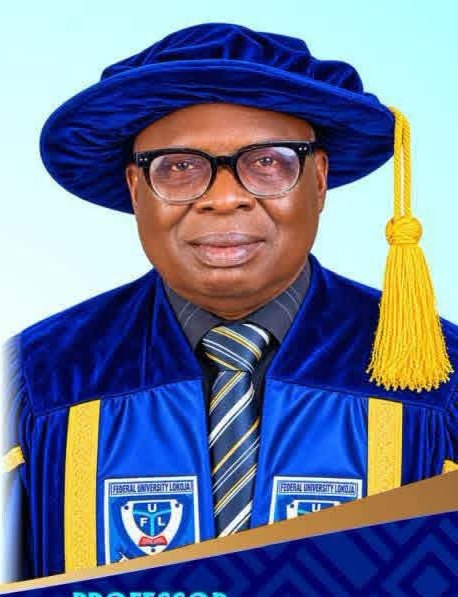
A professor of theatre arts at the Federal University Lokoja (FUL), Prof. Awam David Menegbe, has said Nigeria’s theatre renaissance has stalled because of poor policy implementation and inadequate funding, not a shortage of ideas.
Menegbe spoke on Wednesday while delivering the university’s 48th inaugural lecture, titled “Theatre Infrastructure for National Renaissance in 21st-Century Nigeria”. The Vice-Chancellor, Prof. Gbenga Ibileye, hosted the event.
“The take-home is that theatre can transform society. It is the infrastructure we have ignored, and we must build it,” he said.
He introduced a four-layer model of theatre infrastructure: Places, Policy, People and Patrimony. According to him, national renaissance cannot be decreed.
“Buildings without people become monuments. Policy without funding becomes a document. Training without publics produces unemployed graduates. Patrimony without institutions fades,” he said.
Menegbe lamented that successive governments adopted frameworks without building the machinery to deliver them. He cited the drama syllabus launched with the 6-3-3-4 education system in 1982, which no school has fully implemented.
In Kogi State, he said, no drama teachers have been recruited and no drama resource centres established. He also noted that the Endowment Fund for the Arts, announced in 1989, remains unactualised.
The scholar said theatre-in-education could raise a new public that would return to the values of respect, hard work and service to the common good.
FUL to Graduate 5,638 Students, 24 First Class Honours at 10th Convocation
He warned that leaders often surround themselves with praise singers until their ears are closed to the groaning of the people.
“Theatre can be either a praise singer or a critic. Which one it becomes depends on its infrastructure,” he said.
Menegbe urged the government to adopt community theatre to reach communities with information, adding that it allows people to interrogate information and use it for themselves.
Drawing on 40 years of research into indigenous traditions, including the Jigbe festival of the Bassa-Nge and the Ovia Osese festival of the Ogori people, he said Nigerian heritage is a renewable resource, not a museum piece.
He cited interventions in Inwa, Ochaja, Etutekpe and Acharu, which led to the formation of farmers’ cooperatives and the rehabilitation of boreholes.
To close the implementation gap, he proposed a mandatory “Implementation Compact” for every theatre law or programme, with a named agency, budget line, timetable and public report.
He also called on the government to return to the moral standards of the forefathers, under which those who had enough shared with others.
“Let Nigeria build the infrastructure of its own theatre. A renaissance cannot be decreed. It grows. It needs soil, water, and gardeners,” he said.
