
By Arogundande Oluwagbemiga
“When the integrity of a head of a court is in question, the very foundation of justice trembles; for it is not the law alone that upholds society, but the trust in those who interpret it.” — Jean-Jacques.
A court derives its authority not just from statutes or precedents, but from the perceived moral uprightness of its leaders. When that trust falters, public confidence in justice itself is endangered.
Justice, in its purest conception, is blind but never blindfolded by deceit. It is meant to be impartial, untainted, and immune from the corrosion of personal interest. The courtroom stands as a sacred altar where truth is weighed, and conscience is tested. When that altar is defiled, desecrated, or stained, the tremor is not confined to marble floors and wooden gavels; it shakes the very soul of a nation.
In every constitutional democracy, the judiciary is the last hope of the common man. It guards rights, interprets the law, and stabilises society in times of political and social turbulence. Where other institutions falter, the courts must stand firm, guided not by convenience but by character. The moral force of the judiciary lies not in the robe it wears but in the integrity it commands.
History warns that the gravest threat to justice is not always external interference but internal decay. When those entrusted with adjudication appear entangled in allegations of impropriety, the symbolism is devastating. It signals vulnerability at the very heart of governance.
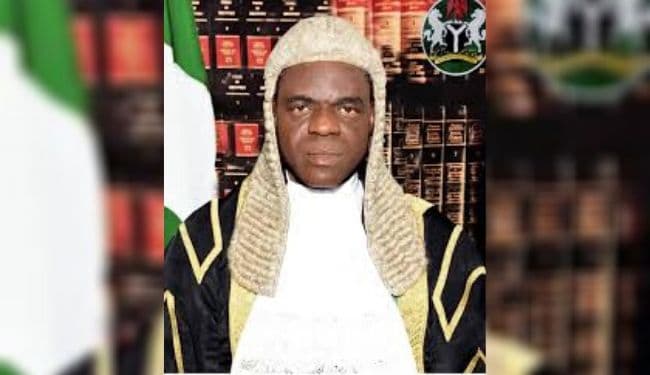
It is against this troubling backdrop that the unfolding controversy surrounding the Chief Judge of the Federal High Court of Nigeria, Justice John Terhemba Tsoho, demands sober reflection and meticulous attention.
A judicial officer of such towering status is not an ordinary public servant. The office of Chief Judge of a Federal High Court demands unimpeachable integrity, administrative discipline, and ethical clarity. The Constitution of the Federal Republic of Nigeria and the Code of Conduct for Public Officers require absolute transparency, particularly in matters of asset declaration. A Chief Judge must not merely obey the law; he must personify it.
The head of a court must exemplify probity, accountability, and rectitude. Justice John Terhemba Tsoho occupies a position where even perception carries constitutional weight. Judicial authority rests not merely on statutory power but on moral credibility. The slightest shadow can eclipse years of distinguished service.
HIGHHANDEDNESS.
Since the appointment of Justice John Terhemba Tsoho, critics argue that the Federal High Court has struggled with mounting administrative and credibility challenges. Allegations of nepotism, tribal favouritism, sharp practices in the award of contracts and in professional activities, and highhandedness in dealings with issues relating to brother judges and general staff welfare have trailed his tenure. Whether proven or not, such narratives erode confidence in the institution Justice John Tsoho leads.
Observers contend that under Justice John Terhemba Tsoho’s watch, the court has been mired in controversies ranging from internal disputes to broader concerns about conflicting decisions. Leadership of a federal court demands steady stewardship. When the administrative compass appears uncertain, public doubt inevitably follows.
ASSETS DECLARATION.
The issue that many described as the straw that broke the camel’s back concerns asset declaration. Reports circulating across several quarters allege that Justice John Terhemba Tsoho failed to disclose multiple bank accounts — including domiciliary accounts reportedly held with United Bank for Africa, Access Bank, Zenith Bank, and First City Monument Bank — in the April 2024 mandatory declaration submitted to the Code of Conduct Bureau. This is not only a grave offence but also embarrassing for a man in the temple of justice.
Asset declaration is not ceremonial paperwork; it is a constitutional safeguard. Failure to declare assets fully and sincerely may constitute a breach of Paragraph 11 of the Fifth Schedule of the 1999 Constitution. For a judicial officer of the rank of Justice John Terhemba Tsoho, such an allegation strikes at the core of constitutional accountability. A man whose work revolves around the effective use of the Constitution should not be seen or heard to be flouting it.
Again, as a judicial officer, Justice John Terhemba Tsoho is bound by a higher threshold of compliance. Ignoring or disregarding asset declaration requirements exposes him to sanctions, including prosecution before the Code of Conduct Tribunal, possible removal from office, and forfeiture of undeclared assets. The law is not ornamental; it is binding.
It is on record that Justice John Terhemba Tsoho has been invited by the Code of Conduct Bureau to answer questions regarding these allegations. Insiders suggest that he is responding to the summons through appropriate channels, albeit with procedural twists.
MOVEMENT OF CASH TO EVADE SEARCH.
While the public calls for investigation intensify, reports have emerged alleging movements of a significant amount of cash in local and foreign currencies away from the residence of Justice John at his Aso Drive, Abuja residence. Sources close to Justice claimed precautionary motives, yet the optics remain troubling.
To prove the above allegation, it has been alleged that Mrs Helen Tsoho, wife of the Chief Judge of the Federal High Court, was intercepted along the Abuja–Makurdi axis with substantial sums of money in cash— figures widely circulated include USD160,000.00 and ₦22,000,000.00, — reportedly en route to Vandeikya Local Government, the country home of Justice John Terhemba Tsoho. These claims are said to be under investigation by security authorities.
AGE FALSIFICATION.
Age falsification is a Criminal Liability; either to obtain employment, promotion, or benefits in elongation of service or stay of office constitutes fraud or obtaining by false pretences under the Criminal Code Act (Cap C38, Laws of the Federation of Nigeria 2004). So, there is a serious controversy around the actual age of the Chief Judge of the Federal High Court weather it is 1955 or 1959. There should be no ambiguity in this. The NJC has the authentic records of all its employees and should act immediately and decisively too. But they would not age, but allow the sacred image of the judiciary be dragged in the mud just to please one ego-centric individual whose personal lifestyle is causing reputational damage to a system.
In the face of these damaging, reputation-puncturing, injurious, harmful, destructive, detrimental and weighty allegations, some elements in the country appear to be bent on making gains out of.
There is an allegation that some powerful, influential leaders, prominent personalities, and high-ranking officials are trying to block the whole investigation. Of note is a certain Minister of the Federal Republic in the present cabinet of President Bola Tinubu, a very rich Senior Advocate of Nigeria from a state in the North Central Zone of Nigeria, the NBA President who is bankrolled by the said SAN, and the Judiciary from appearing to clear his image before the CCB, just on the excuse that his counsel- Kanu Godwin Agabi, SAN is not in the country.
In like manner, further allegations suggest that other assets may be concealed through proxies or documentation adjustments. While these remain allegations requiring proof, the seriousness of such claims underscores the weight of the moment confronting Justice John Terhemba Tsoho. In this case, close staff and aides handling finances, as well as family members and allies, are now under serious surveillance and investigation.
The irony is profound. For a judicial officer of such standing to be caught in what critics described as a murky, ignominious, reprehensible, scandalous, unbecoming, disconcerting, and deeply troubling web of allegations is deeply disappointing.
Moreover, the matter was reportedly scheduled for questioning before the Code of Conduct Bureau on March 2, 2026, but a press statement from the court’s Director of Information indicated that Justice John Terhemba Tsoho preferred not to attend without legal representation, citing the temporary absence of counsel, Kanu Godwin Agabi, CON, SAN. The press statement itself is dry and lacking in substance.
It is profoundly laughable and deeply disappointing. At the level of a Chief Judge of a federal court, reliance on a single lawyer, no matter how eminent, for such a critical procedural obligation reflects a shocking lack of independence, foresight, and professional adaptability.
Justice John Terhemba Tsoho occupies an office that demands the capacity to act decisively and in accordance with the law, irrespective of temporary personal inconveniences.
That a senior judicial officer places complete confidence in only one legal counsel, who happens to be unavailable, undermines public perception of the judiciary’s competence. It casts doubt not only on his personal judgment but also on the institutional strength he represents.
Observers can reasonably view it as a contrived delay tactic, an attempt to postpone accountability under the guise of technical necessity, which erodes trust in the Federal High Court and feeds suspicion about concealment or influence.
In essence, it is both embarrassing and astonishing that a person charged with upholding justice could allow procedural convenience to take precedence over the duty to answer serious allegations promptly. For a man in the temple of justice, this posture is antithetical to the principles of probity, independence, and moral courage expected at his level.
Critics find it embarrassing that Justice John Terhemba Tsoho would appear dependent on a single lawyer to honour an investigative invitation. Many interpret this as a delay tactic intended to buy time. Perception in matters of justice is powerful, and delay often breeds suspicion.
Allegations further claim that influential figures may be attempting to shield Justice John Terhemba Tsoho from scrutiny. If true, such actions would compound public distrust and deepen institutional cynicism.
Furthermore, masking a Chief Judge carries grave implications. Reports indicate that powerful ministers and senior legal figures may be exerting influence to prevent rigorous investigation. Such developments, if accurate, threaten the very architecture of accountability.
It should be on record that Nigeria’s judiciary is already battling public scepticism arising from conflicting judgments, election litigations, and corruption allegations. The head of a court facing integrity questions must not be treated with levity.
The National Judicial Council must assert that accountability is blind to rank. Disciplinary measures must not fall only on lower judicial officers while sparing the high and mighty.
At a time like this, civil society organisations must be activated to bear constitutional responsibility and demand transparency. Section 14(2)(a) of the Constitution declares that sovereignty belongs to the people. Vigilance is not hostility; it is a democratic duty.
The media must rise to its watchdog role — not merely to bark, but to bite when necessary. Editorials, investigative reporting, and rigorous commentary are indispensable in preserving institutional accountability. Silence in moments like this weakens democracy.
Calls have grown for the interim suspension of Justice John Terhemba Tsoho pending investigation. The President, Bola Ahmed Tinubu, must urgently rally around the NJC to activate this. Suspension is not a conviction; it is a protective measure to safeguard the integrity of the Federal High Court and the judiciary as a whole.
With Nigeria heading toward the 2027 elections, public confidence in the judiciary is paramount. If Justice John Terhemba Tsoho were to preside over politically sensitive matters while personally facing corruption allegations, the doctrine of judicial impartiality could be severely strained.
Socially, such controversy erodes trust. Legally, it undermines institutional credibility. Economically, investors question the reliability of contract enforcement. Politically, it weakens democratic stability. Diplomatically, it stains Nigeria’s image as the Giant of Africa.
The Nigerian Bar Association, the Chief Justice of Nigeria, and the President must act in the broader interest of justice. Encouraging Justice John Terhemba Tsoho to present himself fully for investigation would strengthen, not weaken, the court’s honour.
In the temple of justice, words such as integrity, probity, rectitude, transparency, and accountability are not decorative ideals; they are foundational obligations. A judge must be above suspicion, beyond reproach, and immune to compromise.
From Aristotle’s ethics to Montesquieu’s separation of powers, philosophers remind us that the legitimacy of law rests upon the virtue of those who interpret it. When virtue is questioned, authority trembles.
In Nigeria’s recent judicial history, a few heads of court have faced investigation or trial processes connected to asset declaration and Code of Conduct issues. Their cases demonstrate that no judicial office is immune from scrutiny.
One notable example is Walter Samuel Nkanu Onnoghen, former Chief Justice of Nigeria, who in 2019 was arraigned before the Code of Conduct Tribunal over allegations of false asset declaration and failure to disclose certain domiciliary accounts. He was eventually removed from office and forfeited some assets.
Another example is Ayo Salami, former President of the Court of Appeal. Though his case centred on NJC disciplinary proceedings rather than a full CCB trial, his suspension and prolonged investigation underscored the principle that even heads of court are subject to oversight when questions arise about professional conduct.
A further instance involves Sylvester Ngwuta, a Justice of the Supreme Court, who faced charges including alleged false asset declaration and was prosecuted by anti-corruption authorities. Though not a head of court, his case reinforced that senior judicial officers are not beyond investigation.
These cases collectively establish a critical constitutional principle: accountability in the judiciary must be rank-neutral. The Fifth Schedule to the 1999 Constitution mandates asset declaration for all public officers, including judicial heads. The Code of Conduct Bureau and Tribunal framework does not carve out exemptions for the Chief Justice, President of the Court of Appeal, or Chief Judges of superior courts.
If a former Chief Justice of Nigeria could be investigated and tried over asset declaration discrepancies, then consistency demands that any current head of court facing similar allegations be subjected to the same transparent process. Selective enforcement weakens the rule of law; uniform enforcement strengthens it.
The credibility of the judiciary rests on the maxim that “no one is above the law.” Making exceptions for a sitting head of court would create a dangerous precedent, suggesting that institutional hierarchy confers immunity. In a constitutional democracy, it does not.
Therefore, if credible allegations exist and lawful procedures are initiated, the current matter should proceed without fear or favour. Equality before the law is not merely a slogan; it is the cornerstone of judicial legitimacy.
This moment is larger than any individual. It is a test of whether Nigeria’s constitutional architecture can withstand internal pressure. The investigation of Justice John Terhemba Tsoho must proceed with strict adherence to due process, forensic thoroughness, and institutional courage. Justice demands no less.
The National Judicial Council, the Code of Conduct Bureau, and all constitutionally empowered institutions must deploy the same investigative rigour applied to other public officials. Selective leniency is injustice in disguise. Institutional integrity survives only where standards are uniform.
In the end, justice must cleanse itself or risk corrosion. When the guardian of the temple stands accused of defiling its sanctity, silence becomes complicity. The law must speak — calmly, firmly, and without prejudice — so that the robe remains a symbol of purity, not privilege.
Once confidence in a judge weakens, every decision is received with suspicion rather than respect. Justice may still be declared, but it may no longer be believed. The danger goes beyond reputation. An embattled judicial officer becomes exposed to pressure, influence, and diminished moral authority.
In any democracy, the gravest threat is not loud attacks on justice but silent doubt in its credibility. For when justice wears a mask, society must insist that it be removed — so that truth may stand unmasked. Justice John Terhemba Tsoho must present himself before the Code of Conduct Bureau for a full investigation.
A clear conscience fears no accusation!
Arogundande is a public affairs Analysist and Social Commentator. He writes from Abuja
