
By Ayobami Omole-Iyagin
Mopamuro Local Government Area (LGA) is a key administrative division in Kogi State, North Central Nigeria, with its headquarters in the town of Mopa, known for its Yoruba population, focusing on agriculture (yam, cassava) and facing infrastructure challenges, while also boasting rich Okun culture and intellectuals, Mopamuro is part of the Kogi West Senatorial District.
For decades, the people of Yagba Federal Constituency comprising Yagba East, Yagba West, and Mopamuro local governments have operated a rotational arrangement to elect a Federal representative for the national assembly seat.
The intention behind this informal power-sharing structure is to promote fairness, inclusion, and unity across the three councils. However, as time has shown, Mopamuro local government appears to be consistently short changed in the cycle.
Despite its strategic location, vibrant population, and capable leaders, Mopamuro has repeatedly played second fiddle in the rotational politics of Yagba. While Yagba East and Yagba West have produced multiple representatives at the federal level, Mopamuro often gets overlooked, or at best, is compensated with less influential roles.
These are the past representatives for the Yagba Federal Constituency in the Nigerian House of Representatives since the return to democracy in 1999 are:
Hon. Shola Ojo (Mopamuro, 1999-2003): He was the first representative for the constituency in the Fourth Republic, serving a single term under the People s Democratic Party (PDP).
Hon. Tolorunjuwon Joseph Faniyi (Yagba East, 2003-2007): He succeeded Shola Ojo and served one term, as part of an initial understanding for the seat to rotate among the three local government areas (Mopamuro, Yagba East, and Yagba West).
Hon. Samuel Bamidele Aro (Yagba West, 2007-2011): He also served a single term. The 2011 election, in which the incumbent Aro sought a second term, effectively ended the unwritten rotation agreement.
Hon. Sunday Karimi (Yagba West, 2011-2019): He was elected in 2011 on the platform of the Action Congress of Nigeria (ACN) and re-elected in 2015 on the PDP ticket, making history as the first person to serve two terms for the constituency. He is currently a Senator representing the Kogi West Senatorial District.
Hon. Leke Abejide (Yagba East, 2019-present): He was first elected in 2019 and re-elected in 2023 on the platform of the African Democratic Congress (ADC), matching Karimi’s record of back-to-back victories. He is the current representative who is also aspiring to return for a third term under the ADC.
From the above narration, it is crystal clear that Mopamuro Local government area have been grievously cheated and sidelined while others have had their fair share of the rotational arrangement.
Proponents of a balanced rotation insist that the idea was never about dominance or numbers but about giving each LGA a fair opportunity to lead and contribute. Mopamuro, though the smallest in population, has every constitutional and moral right to occupy the same positions as its counterparts.
Critics argue that politics is a game of numbers and strategy, not sentiment. However, without fairness, unity becomes fragile, and democracy loses its meaning at the grassroots.
As another political cycle approaches, voices are growing louder across Yagba and beyond, calling for a corrective shift. Youths, community leaders, and political stakeholders are urging parties and decision-makers to uphold the spirit of equity by allowing Mopamuro its rightful place in the rotation.
The people of Mopamuro are not asking for favors they are asking for what is due. They have shown and sown the seed of loyalty, participation, and capacity. All they seek is inclusion.
Yagba s rotational arrangement was built on trust and mutual respect. If it must endure and serve its purpose, justice must be seen to be done. It s time to stop treating Mopamuro as an afterthought and start recognizing it as an equal stakeholder in the Yagba political family.
Since the return to democratic rule in 1999, the House of Representatives, and even key appointments have largely oscillated between Yagba East and Yagba West. In contrast, Mopamuro s representation at these levels has been limited and irregular except for the recent appointment of Commissioners which came in Favour of Mopamuro. Observers argue that this imbalance contradicts the very essence of rotation.
For instance, the House of Representatives seat meant to rotate among the three LGAs has seen dominance from Yagba West and East. Mopamuro s turn is either delayed or dismissed under the guise of electability or party structure strength.
The impact of this marginalization is both political and developmental. Politically, it fosters disenchantment among Mopamuro’s electorate, leading to low voter turnout and weakened party structures. Developmentally, the area suffers from unequal attention in resource allocation, infrastructure, and federal/state presence.
It also risks fueling divisiveness among the Yagba people, undermining the unity that the rotational agreement sought to protect.
Worthy of note is the fact that Mopamuro local government area have qualified sons and daughters who are of proven characters and records who are good enough to be elected as Federal Legislators. They are of course ready and willing to run for the office.
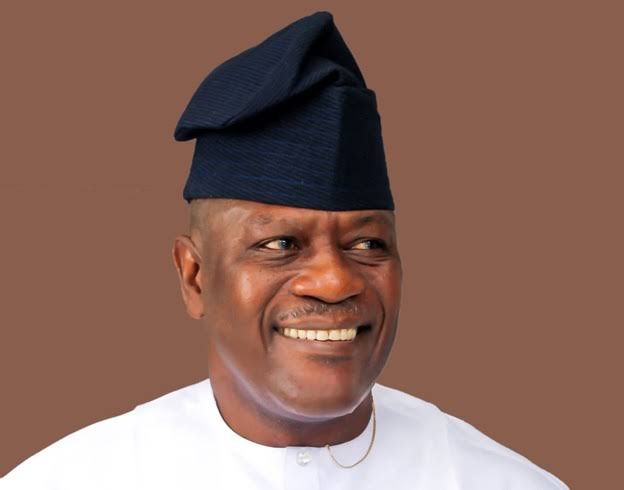
Notable among them is Brig. Gen. Benjamin Segun Ipinyomi (Rtd). Gen. Ipinyomi is a distinguished and results-driven senior military officer with over three decades of meritorious service in the Nigerian Army. He Demonstrated expertise in defense education, command leadership, security strategy, museum and archival management, and civil-military relations.
He has a Proven record of pioneering and executing transformative projects within the Nigerian Army and beyond. Gen. Ipinyomi is an accomplished public speaker and participant in numerous international conferences, fostering cross-national collaboration in security, defense, education, managerial capabilities, and national development.
Among many other things, He Successfully led the strategic registration of the National Defence College Museum with the National Commission for Museums and Monuments in 2016, ensuring its official recognition and preservation as a national heritage institution.
He initiated the relocation of the Nigerian Army Museum from Chindit Barracks, Zaria to a prime location in Asokoro, Abuja (2011 2012). This initiative aimed to reposition the museum as a viable, income-generating asset of the Nigerian Army through strategic partnerships with international foundations and NGOs. A comprehensive proposal to this effect was formally submitted to the Chief of Administration (Army).
Gen. Ipinyomi was appointed as the President of the General Court Martial (GCM) for the Nigerian Army s 2 Division, Ibadan, Oyo State (2009 2010), providing exemplary leadership in the administration of military justice among others.
His wealth of experience in Military operations within and outside Nigeria will enable him to initiate plans and programs that will undoubtedly bring a halt to the rising insecurity that is about to swallow Yagbaland.
– Ayobami Omole-Iyagin MNIM, PGD is a Journalist, Multimedia Professional and a Mass Communication Lecturer.
