
By Janet Samuel, Ndiob, Senegal
For decades, unreliable electricity supply has remained one of West Africa’s biggest obstacles to economic growth and social development. Millions of people across the region, particularly those living in rural communities, remain outside the reach of national electricity grids, forcing governments and development partners to explore alternative solutions capable of delivering affordable and sustainable energy.
With abundant sunshine available throughout the year, renewable energy has increasingly emerged as one of the most viable options for bridging the power gap. Senegal is among the countries taking advantage of this opportunity, deploying decentralized solar systems to bring electricity closer to remote communities and stimulate local economies.
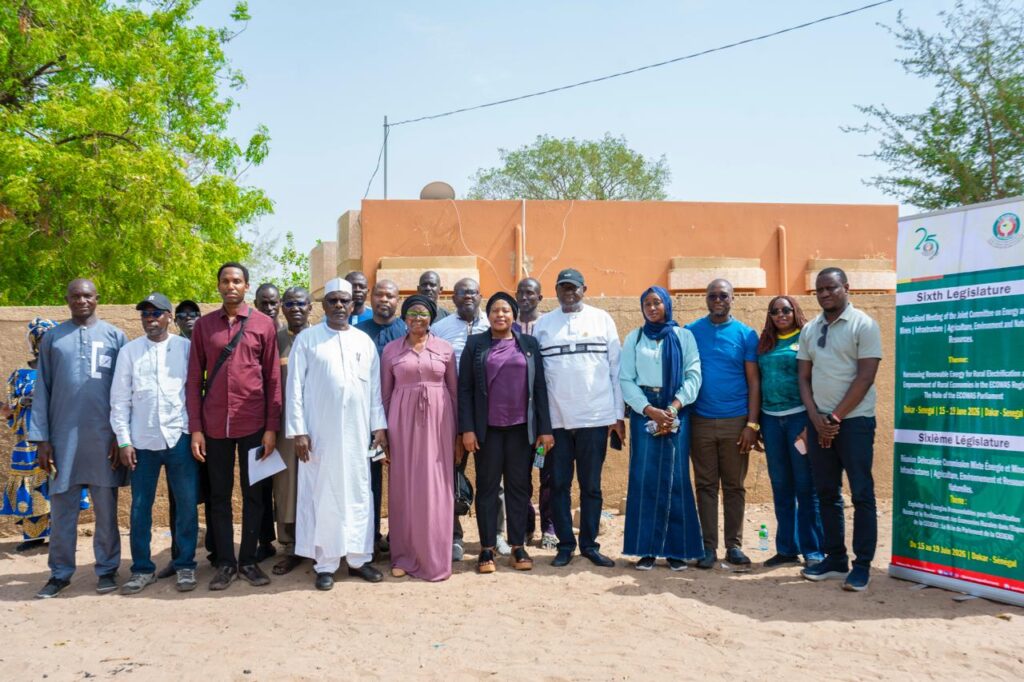
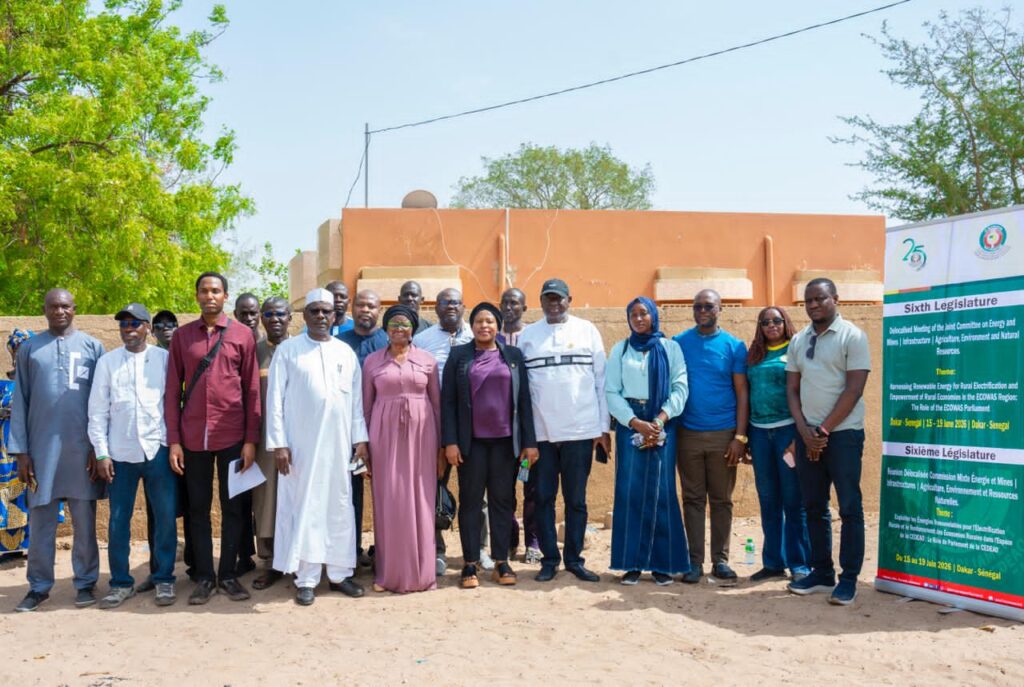
It was against this backdrop that members of the ECOWAS Parliament Joint Committee on Energy and Mines, together with the Committees on Infrastructure, Agriculture, Environment and Natural Resources, travelled from Dakar to the Commune of Ndiob in Senegal’s Fatick Region on June 18, 2026, to witness firsthand how renewable energy is changing lives in rural communities.
Encomiums As Philanthropist Donates Solar Power Street Lights To Kogi Community
The field visit formed part of the ongoing delocalized meeting on the theme, “Harnessing Renewable Energy for Rural Electrification and Strengthening Rural Economies in the ECOWAS Region: The Role of the ECOWAS Parliament.”
Led by the head of delegation, Hon. Fanta Conté, the lawmakers were welcomed by Ndiob Mayor Oumar Bâ and officials of Green Impact West Africa, headed by its founder and Managing Director, Anna Ndiaye.
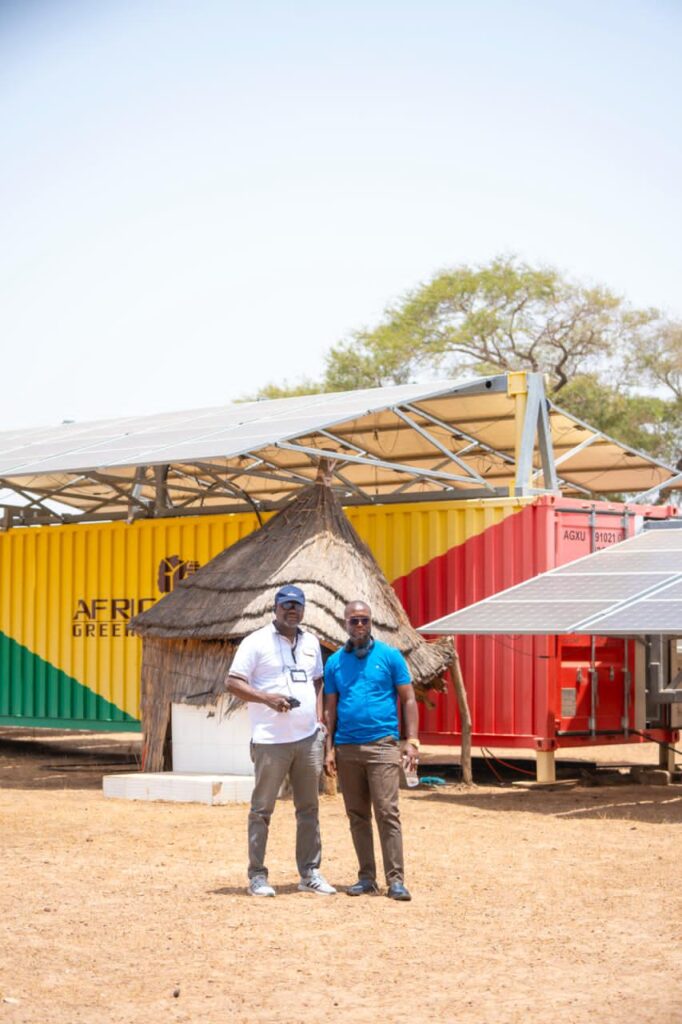
Established under a mandate from Senegal’s Rural Electrification Agency (ASER), Green Impact West Africa currently manages the Ndiob solar installation, which was initially conceived in 2019 and commissioned in 2021 as one of Senegal’s pilot projects for rural electrification.
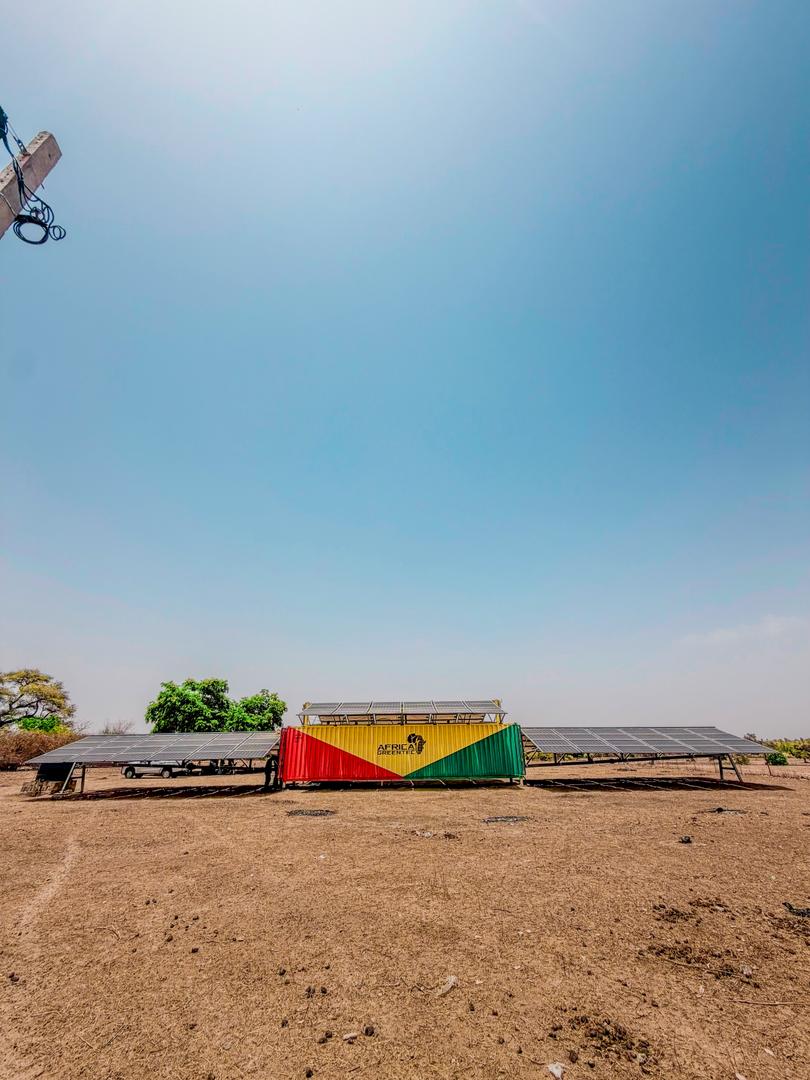
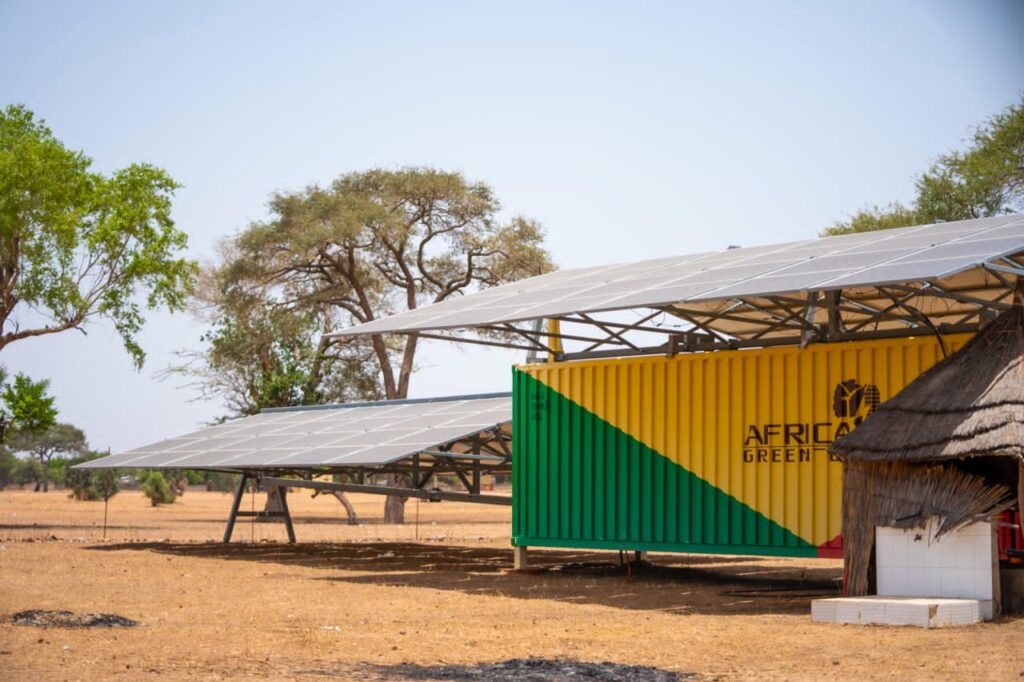
At the heart of the project is the Solartainer power plant, a self-contained solar facility built around a 40-foot container and equipped with 144 photovoltaic panels with a capacity of 50 kilowatt peak and a TESVOLT lithium-ion battery storage system capable of storing 134 kilowatt-hours of energy.
The system supplies electricity to the villages of Bacco Dior, Bacco Sérère and Bacco Mboytolle through a low-voltage distribution network supported by smart meters that enable remote monitoring and digital billing.
Besides supplying power to homes and businesses, the facility provides clean water through an integrated purification system and has the potential to support agricultural cold-chain solutions aimed at reducing post-harvest losses.
Project managers disclosed that the installation currently has the capacity to serve 100 households, 20 small and medium enterprises and ten social institutions, including schools, health centres and places of worship.
According to surveys conducted in the community, access to electricity has transformed daily life for residents. Dependence on candles, kerosene lamps and small generators has reduced significantly, while children now enjoy better learning conditions and households have improved security due to reliable lighting, including solar-powered street lights.
Women and young people have also benefited through reduced household chores and the creation of jobs for technicians, maintenance personnel and commercial agents.
The local economy has equally witnessed significant improvements. Artisans such as welders, carpenters, tailors and mill operators have expanded their productive capacities, while extended hours of electricity supply have enabled businesses to operate beyond sunset.
Cold storage facilities have helped reduce post-harvest losses, strengthening the competitiveness of local agricultural producers.
Social institutions have not been left out. Health centres now preserve medicines under proper refrigeration, schools enjoy improved learning environments, while mosques and community centres have become better connected.
Despite these gains, the visit revealed challenges confronting both operators and residents.
Green Impact West Africa cited difficulties in maintaining and replacing equipment in hard-to-reach areas, the need for continuous funding to guarantee sustainability and the necessity of building local technical and financial management capacities.
The operator also faces regulatory coordination challenges involving ASER and SENELEC as Senegal’s energy landscape continues to evolve.
On the side of the population, some households struggle to pay electricity bills during lean seasons, while many residents are still learning how to harness electricity productively for income generation.
Growing demand has also begun to exceed the initial installed capacity, resulting in low and irregular voltage supply.
During interactions with residents, ECOWAS parliamentarians encouraged the community to maximize the opportunities offered by renewable energy.
One of the lawmakers, Hon. Ahmed Munir, the Vice Chairman of the Ecowas Committee on infrastructure advised young people to embrace opportunities in the solar industry and become active participants in the energy transition.
He urged the youths to invest in standalone solar installations and maintenance services, noting that it would be difficult for conventional electricity infrastructure to reach every community simultaneously.
“The youth can take this technology to another level and become entrepreneurs and innovators in the renewable energy sector,” he said.
Chairman of the ECOWAS Parliament Committee on Agriculture, Senator Ali Ndume, called on women to take advantage of solar-powered equipment to improve their economic fortunes.
He encouraged mothers and women’s groups to pool resources and invest in solar-powered refrigerators and other devices capable of generating income through food preservation and the production of ice and beverages.
According to him, communities should not wait indefinitely for governments but should seize the opportunity created by the declining cost of solar technologies to establish sustainable businesses.
Beyond technical presentations and policy discussions, the strongest testimony came from a resident of Ndiob, Mustafa Faye.
“You will not say this is a village when you come here. It looks like a town because many people working in Dakar have their houses here,” he said.
According to him, electricity has made life easier for residents by allowing households to own refrigerators and other appliances.
However, he admitted that the growing population and rising demand have exposed the limitations of the existing installation.
“The electricity is low and not regular. We cannot even use air conditioners because the batteries cannot support them. Everybody wants electricity now, but the system is no longer enough for the population,” he explained.
Faye welcomed plans to complement the solar system with the national grid to increase energy supply and urged authorities and development partners to invest in more efficient battery storage systems.
“Africa has sunlight all year round. Solar energy is very good, but we need better batteries and stronger equipment to supply everything we need,” he said.
Despite the challenges, Green Impact West Africa is looking beyond Ndiob.
Building on the success of the pilot project, the company plans to expand electricity access to other unelectrified villages, introduce solar-powered cold-chain systems for farmers, establish economic empowerment programmes for women and youths and support Senegal’s national rural electrification strategy through partnerships with ASER and other public institutions.
The company also hopes to replicate the Ndiob model across other communities in Fatick Region and beyond, positioning itself as a key player in West Africa’s renewable energy sector.
For members of the ECOWAS Parliament, the Ndiob experience provided a practical demonstration of how renewable energy can improve livelihoods and stimulate economic activities in rural areas.
Yet it also underscored the urgent need for stronger storage systems, increased investment, local capacity building and supportive policies if renewable energy is to become a lasting solution to West Africa’s electricity deficit.
As the lawmakers concluded their visit, one message stood out clearly: while the sun may provide the resource, it is investment, innovation and community participation that will ultimately determine how far renewable energy can power the future of rural West Africa.
