
By Seun Omole, Abuja
The Coalition of Civil Society Organizations has called on the National Assembly to promptly publish the final version of the Electoral Act 2026 as signed into law to ensure public awareness, legal clarity, and stakeholder engagement.
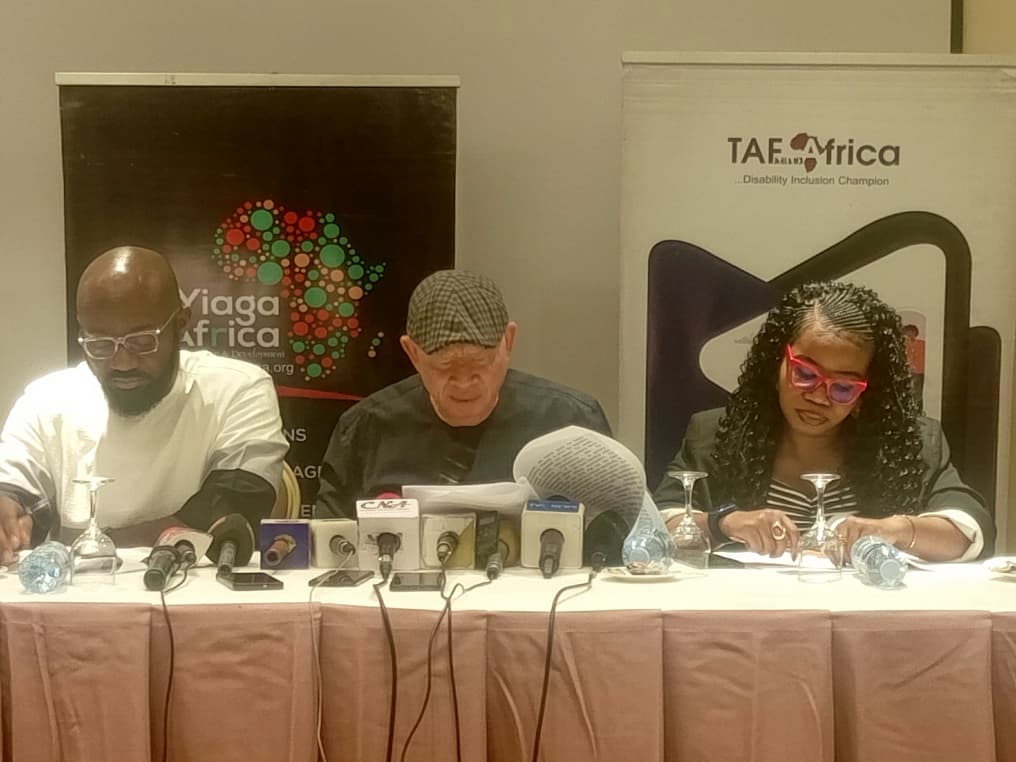
The Co- convener and Founder of TAF Africa, Jake Epelle made the call at a press conference on the passage of the Electoral Act 2026, in Abuja.
Epelle emphasized that the Act which is now law, is imperfect, incomplete , leaves dangerous loopholes open and erects new barriers to participation.
He added that the law is a missed opportunity for the transformative electoral reform that Nigeria requires and that Nigerian citizens deserve.
According to him, as at a time when public confidence in elections remains fragile, this law should have decisively strengthened transparency, eliminated-ambiguities, and deepened safeguards against manipulation, stating that instead it creates more vulnerabilities in the electoral process.
He stated that Section 84 of the act restricts parties to only two options for candidate nomination: direct primaries or consensus, explaining that by removing the option of indirect primaries, which, when properly regulated, can offer a more structured and less chaotic selection process, the Act reduces flexibility and pushes parties towards methods that are highly vulnerable to vote-buying (direct primaries) or godfather manipulation (consensus)
Ekpelle noted that Section 75(6) imposes a ₦50 million administrative fee for new political party registration, he said this is not administrative cost recovery; it is a financial moat designed to exclude grassroots movements, youth-led parties, and non-elite political formations from formal competition but an anti-democratic and anti-constitutional.
“The National Assembly must promptly publish the final version of the Electoral Act 2026 as signed into law to ensure public awareness, legal clarity, and stakeholder engagement.
“In conclusion, the Electoral Act 2026 is now law. It is imperfect. It is incomplete. It leaves dangerous loopholes open and erects new barriers to participation. But it is also the legal framework within which the 2027 elections will be conducted and it is our responsibility as citizens, media, civil society etc, to ensure that the elections conducted under this law are credible, transparent, inclusive, and reflective of the will of the Nigerian people,” he noted.
Further speaking, In light of the new 300-day notice requirement under the Electoral Act 2026, the group demands that INEC must urgently publish a revised timetable and schedule for the 2027 general elections.
The group charged INEC to organize a national simulation exercise of IReV electronic transmission across all 176,866 polling units, with independent observers presents.
In response , the spokesperson of House of Representatives, Akin Rotimi while speaking on Electoral Act Amendments and Transmission Protocols, he said that the Electoral Act mandates electronic transmission of results, with manual fallback if necessary.
He warned that strict penalties exist for returning officers who fail to transmit results on time.
He noted that new Act mandates all aspirants to formally sign consensus outcomes, strengthening candidate selection transparency.
He disclosed that INEC is granted flexibility to adjust election timelines to mitigate voter apathy during religious observances, aiming to improve turnout.
