
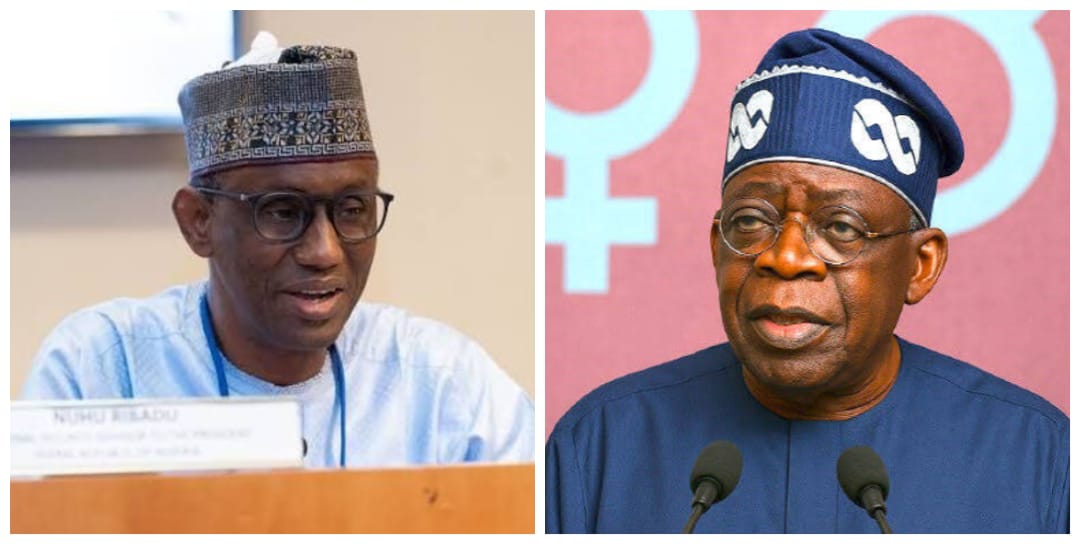
The Niger Delta Stakeholders Forum (NDSF), Wednesday, commended President Bola Tinubu and the National Security Adviser, (NSA) Mallam Nuhu Ribadu in their efforts of securing and making the country to be stable.
This is contained in a Statement entitled “The Silent Wins Of Nigeria’s National Security Architecture And The Task Ahead” and signed by Barrister Andrew Mene, Chairman, Chief Rowland Abarasi Tamunopiri, Secretary and Chief Umukoro Joseph Erhimeyoma, Publicity Secretary, who highlighted the significant strides made in securing the Niger Delta region, curbing crude oil theft, and stabilizing the local economy.
Niger Delta Leaders Urge Tinubu to Resist Revocation of Tompolo’s Pipeline Deal
They said that under President Ahmed Bola Tinubu’s administration and National Security Adviser (NSA) Mallam Nuhu Ribadu, Nigeria’s national security architecture has achieved notable wins, particularly in the Niger Delta.
They listed key achievements to include 80% reduction in security breaches impacting onshore oil infrastructure (May 2023 – January 2026),Improved business operations and national oil production,Job creation and community development initiatives and Enhanced security and stability in the region.
They noted that strategies such as Cohesion and coordination among security agencies,
Alignment between NSA, Minister of Defence, and Service Chiefs, Deployment of technology and international partnerships and Community-focused approach and inclusive security response really paid off.
The NDSF therefore commended the NSA and President Tinubu’s administration for their efforts, citing inspiration and hope for a secure and stable Nigeria.
Here Is The Full Press Statement:
NIGER DELTA STAKEHOLDERS FORUM (NDSF)
THE SILENT WINS OF NIGERIA’S NATIONAL SECURITY ARCHITECTURE AND THE TASK AHEAD
* PART 1: FOCUS ON THE NIGER DETA AND WAR AGAINST CRUDE OIL THEFT
National security encompasses the comprehensive measures a state takes to ensure its survival, territorial integrity, and sovereignty, evolving from strictly military defense to include economic, cyber, environmental, and human security. It aims to protect against both foreign military attacks and unconventional threats like terrorism, pandemics, and economic instability.
This basic understanding is often overlooked, ignored or misunderstood, even by some learned analysts.
However, Nigeria’s national security approach, particularly under this administration of President Ahmed Bola Tinubu and the current National Security Adviser (NSA), Mallam Nuhu Ribadu, is aimed to holistically encompass and balance these various aspects, to sustain a winning architecture and system.
The NSA understands the strong and central role that the military plays in the structure and strategy of national security, as well as the additional structural requirements for a holistic architecture, just as President Barrack Obama commented on the US national security approach, “we cannot continue to rely only on our military to achieve the national security objectives that we have set…”
Accordingly, the NSA working under the President and Commander-In-Chief has devoted significant resources to supporting and coordinating the work of the Armed Forces of the Federal Republic of Nigeria along with other security agencies, while giving due attention to all the other critical aspects of the nation’s national security structure. This has resulted in a series of wins for the nation on various fronts, most going without razzmatazz, typical of national security matters.
Some of the achievements and advances recorded so far, which have positioned Nigeria on the winning path, deserve a closer review in this piece.
Principally, the cohesion and coordination of the various security agencies which the NSA has achieved, remains pivotal to the overall performance of the architecture. This critical and strategic leadership role which the NSA provides, leveraging his wealth of experience and extensive understanding of the issues, undergirds the teamwork among security agencies and other partners that is key to advancing the gains being made.
Prominently also, the alignment achieved between the NSA and the Minister of Defence working with the Service Chiefs to provide field-based adjustment of strategy is a key step towards addressing the various security challenges across the regions, besides the arrangements facilitated with international partners by the NSA to provide the Armed Forces with extended capability.
This is in addition to the vast deployment of technology being driven through the work of various security agencies and partners.
However, the largely unsung success story of curbing crude oil theft and sustaining security across the Niger Delta region calls for special focus.
From the inception of President Bola Ahmed Tinubu’s administration and the appointment of the NSA, Mallam Nuhu Ribadu, a clear commitment to achieving peace, security and stability in the Niger Delta region was demonstrated, notably by the prompt working visit to the region which the NSA undertook. The NSA quickly moved to rejig the security architecture in the region and the structure supporting the oil and gas industry to curb the menace of crude oil theft, which has proven to be a masterstroke.
The miilitary and other government security agencies, private security operators, community-based security bodies, local organizations and all other stakeholders were mobilized and organized for coordinated security response, with enhanced technology enablement and exceptional intelligence management.
The combined kinetic and non-kinetic approach, with an all-inclusive community-focused strategy which the NSA has driven under the President with a new political will to achieve results, has yielded stability and security in the region.
The enormity of this is best appreciated against the backdrop of the avalanche and dark clouds of security issues which were rolling across the land at the inception of this administration, and the resolve was not only to stop the tide from engulfing the entire nation, but to roll it back and provide security for all the people of Nigeria.
To the credit of the security architecture deployed across the Niger Delta region coordinated by the NSA, verifiable data from the oil and gas industry shows that a sustained decline in the number of security breaches impacting critical onshore infrastructure has been achieved, with as much as 80% reduction based on month-on-month figures recorded between May 2023 and January 2026.
This has provided an enabling environment for improved business operations by international and local oil and gas companies in the Niger Delta region, stabilized national oil production and is now translating into higher output.
The socio-economic impact on the livelihood of the people is also beginning to be realized as various community development initiatives, job creation for youths and better attention to environmental concerns are being driven under the system, in partnership with other key players and stakeholders.
Indeed, the unfolding success story of the national security architecture in the Niger Delta region still has a long way to go, but the benefits have begun to be realized by the people.
The task ahead for the NSA and the national security architecture spans across the other regions and parts of the country, especially in those areas where a resurgence of security issues has been reported in recent times.
However, the achievements and progress being made under the NSA, and the resolve of the President, inspires hope that with full execution of the strategy, necessary adjustments being made where necessary, and the involvement and support of all well-meaning Nigerians, victory is sure.
SIGNED: FOR AND ON BEHALF OF NIGER DELTA STAKEHOLDERS FORUM (NDSF):
BARRISTER ANDREW MENE
CHAIRMAN
CHIEF ROWLAND ABARASI TAMUNOPIRI
SECRETARY
CHIEF UMUKORO JOSEPH ERHIMEYOMA
PUBLICITY SECRETARY
