
By Joseph Aiyejoto
“No man is an island, entire of itself… any man’s death diminishes me, because I am involved in mankind.
“Therefore, never send to know for whom the bell tolls; it tolls for thee.”
— John Donne, Meditation XVII (1624)
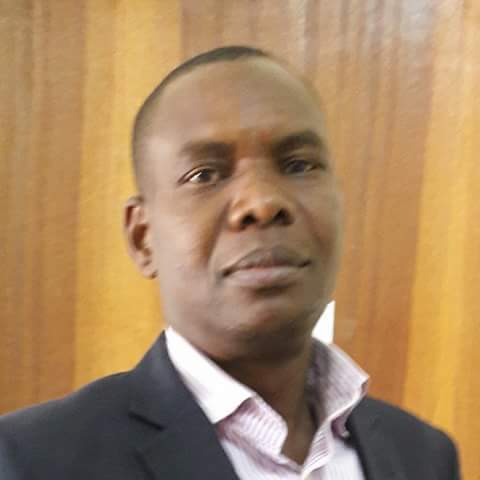
The death of Hon. Mayowa Solomon, Chairman of the All Progressives Congress (APC), Ijumu Local Government Area of Kogi State, is, for me, not merely the passing of a politician. It is also an opportunity for reflection on the fragility of human existence, the brevity of life and, ultimately, the futility of many of the struggles that consume us while we are alive.
Let me state from the outset that I am not even certain that I ever had the opportunity of meeting Hon. Mayowa Solomon personally. I know little or nothing about him beyond the fact that he was an Ijumu son, like me. It is, however, quite possible that our paths crossed at one of the many forums where sons and daughters of Ijumu gather.
His public visibility, from what I understand, was largely associated with his active participation in politics.
But perhaps that is precisely what makes his death worth reflecting upon.
Politics, in its broadest sense, is not entirely alien to any of us. It involves the affairs of government, the exercise of power and influence, the management of collective interests, and even the negotiations and manoeuvrings that occur among individuals and groups.
In one way or another, therefore, we are all involved in the affairs of society.
More importantly, however, before we became politicians, public servants, professionals, businessmen, traditional leaders or members of any social class, we were first human beings.
And in death, all those distinctions are stripped away.
The death of one of us should therefore remind us of our common humanity. As John Donne famously observed, the death of one person diminishes the rest of us because we are all connected by the shared experience of being human.
There is a truth about life that all of us know but rarely allow to influence the way we live: we are not here forever.
From the moment we are born, we begin a journey whose destination is certain, even though its timing remains unknown. Yet, despite this knowledge, much of human existence is spent struggling as though life has no end.
We struggle for power, positions, wealth, land, recognition, influence and material possessions. We compete, sometimes bitterly, for things that we cannot ultimately take with us.
Perhaps if we remembered our mortality more often, we would struggle less, live more peacefully and treat one another with greater humanity.
Life Is Brief
Human life, when measured against the vastness of time, is remarkably brief.
We arrive, grow, pursue our dreams, raise families, build careers, acquire possessions and establish ourselves in society. Before we fully realise it, the years have passed.
The child becomes an adult. The young become old. Those who once occupied positions of authority eventually retire or are replaced. The strong become weak. The celebrated become forgotten. And eventually, every human being faces the same appointment from which no one can obtain a permanent exemption: death.
This should humble us.
Unfortunately, we often live as though we have an unlimited supply of tomorrow.
We postpone reconciliation, kindness, generosity and meaningful relationships because we assume there will always be another opportunity. But life makes no such promise.
The person we refuse to forgive today may not be alive tomorrow. The friend we intend to visit may not be there when we eventually find the time. The good we intend to do may remain undone because the opportunity may disappear before we are ready.
Life is brief. We should therefore be careful about what we do with it.
The Futility of the Struggle for Power
The struggle for power is one of the most intense manifestations of human ambition.
People compete for political offices, appointments, leadership positions, titles and influence. Sometimes, the competition becomes so fierce that people sacrifice friendships, principles, peace of mind and even family relationships.
Yet no position is permanent.
Every office has an occupant today and another tomorrow. Every administration eventually gives way to another. Every leader eventually becomes a former leader.
The tragedy is that some people destroy relationships and compromise their principles in pursuit of positions that they will eventually leave behind.
There is nothing wrong with ambition or the desire to serve in positions of responsibility. The problem arises when position becomes an obsession and power becomes more important than humanity.
If we remembered our mortality, perhaps we would see public office differently—not as personal property to be possessed, but as an opportunity to serve.
After all, no political office has ever conferred immortality on its occupant.
Wealth Has Its Limits
Wealth is useful. It can provide comfort, security, education and opportunities. It can help families prosper and communities develop. There is nothing inherently wrong with legitimate wealth creation.
But wealth becomes dangerous when accumulation becomes the purpose of life.
Some people spend their entire lives acquiring houses, cars, businesses, investments and properties, yet have little time to enjoy the life they are trying so desperately to secure.
The irony is that no amount of wealth can purchase immortality.
A wealthy man may have better healthcare than a poor man. He may live in a magnificent house and enjoy greater comfort. But he remains mortal.
Money can buy many things, but it cannot permanently suspend the passage of time. It cannot negotiate indefinitely with death.
No achievement, no amount of wealth and no position of authority can bestow immortality on any human being.
The Land Will Outlive Us
Human beings also fight passionately over land.
Families engage in prolonged disputes over ancestral property. Communities quarrel over boundaries. Individuals spend years in court over plots of land. Sometimes relationships are destroyed because people cannot agree over who owns what.
Yet the land will remain after all of us are gone.
We may own it today, but tomorrow another person may occupy it. Generations will come and go while the earth remains.
This does not mean that people should abandon legitimate property rights or allow injustice to prevail. Rather, it should remind us that material possessions should never become more valuable than human life, peace and relationships.
What is the wisdom in winning a property dispute while losing a brother?
What is the benefit of acquiring everything while losing everyone?
What is the point of inheriting acres of land if, in the process, we leave behind broken families and bitter memories?
The land will outlive us.
We Cannot Take It With Us
At birth, we came with nothing.
We did not arrive with a bank account, a house, a car, a title, a political position or a piece of land.
Yet, as we grow, we spend enormous energy accumulating these things. Then, at the end of the journey, we leave them behind.
The house remains.
The land remains.
The money remains.
The office remains.
The business remains.
The vehicles remain.
The titles remain.
But we leave.
This is one of life’s greatest lessons: we are custodians, not permanent owners, of most of what we possess.
We may possess things during our lifetime, but ultimately, everything we have belongs to a future we will not personally inhabit.
This should teach us humility.
What Are We Really Fighting For?
Sometimes, it is worth stepping back from our daily struggles and asking some simple questions:
Why are we destroying friendships over positions?
Why are brothers becoming enemies over inheritance?
Why are neighbours fighting endlessly over boundaries?
Why are colleagues undermining one another for promotions?
Why are people accumulating wealth at the expense of their health, families and peace of mind?
Why do we allow political differences to turn into permanent personal hatred?
Ambition is not the problem.
The problem is forgetting our mortality in the pursuit of ambition.
The person we are struggling against is also mortal—and so are we.
One day, both the victor and the defeated will leave the stage.
Remembering Death Can Make Us Better
Remembering death does not mean living in fear. It means living with perspective.
When we remember that life is brief, we become more conscious of how we spend our time.
We become more willing to forgive.
We become less interested in unnecessary quarrels.
We become more appreciative of family and friends.
We become more generous with our knowledge and resources.
We become less obsessed with impressing people.
We become more concerned about the legacy we leave behind.
Mortality can therefore be a teacher.
It reminds the powerful to be humble.
It reminds the wealthy to be generous.
It reminds the ambitious to be moderate.
It reminds the angry to forgive.
It reminds the fortunate to remember the less fortunate.
And it reminds all of us that our time is limited.
The Legacy That Matters
If we cannot take our possessions with us, what then should we leave behind?
Perhaps the most enduring legacy is not the size of our house or the number of properties we acquired, but the number of lives we positively impacted.
People may forget the car we drove, but they may remember the assistance we gave them when they were in need.
They may forget the position we occupied, but they may remember how fairly we treated people.
They may forget how much money we had, but they may remember the opportunities we created for others.
They may forget our titles, but they may remember our character.
They may forget the political battles we fought, but they may remember whether we used our influence to build people or to destroy them.
In the final analysis, a meaningful life is not measured only by what we accumulated, but also by what we contributed.
We Are Only Passing Through
Life is a journey. None of us has been promised permanent residence on earth.
We are only passing through.
Therefore, let us pursue our ambitions, but let us not become slaves to them.
Let us seek wealth, but let us not allow wealth to possess us.
Let us accept positions of authority, but let us remember that every position is temporary.
Let us acquire property, but let us never value land above life.
Let us compete, but let our competition remain humane.
Most importantly, let us remember that our time is short.
The person we are quarrelling with may not be here tomorrow.
The position we are fighting for may soon belong to someone else.
The wealth we are accumulating may one day be spent by people we have never met.
The house we are building may eventually shelter strangers.
And the land over which we are fighting will remain long after our names have disappeared from the earth.
Perhaps, therefore, the wisest way to live is to work hard without becoming consumed by the struggle; pursue success without losing our humanity; acquire wealth without forgetting compassion; seek power without arrogance; and build a legacy that outlives our possessions.
For one day, every struggle will end.
Every title will become history.
Every possession will be left behind.
Every office will have a new occupant.
And every human being, regardless of status, wealth, influence or achievement, will answer the same call of mortality.
That is the great equaliser.
Perhaps this, ultimately, is the lesson that the passing of Hon. Mayowa Solomon offers to all of us — not merely as Ijumu people, not merely as politicians or public servants, but as human beings.
We are only passing through. Life is brief.
Let us therefore spend our limited time not merely trying to have more, but trying to be more — more humane, more useful, more compassionate, more forgiving and more worthy of being remembered.
And when, one day, the bell tolls for each of us, may we leave behind not just possessions, positions and titles, but people whose lives became better because we passed through theirs.
