
The Minister of Education has unveiled the Renewed Hope Education A-Z Scorecard, a comprehensive document designed to showcase the education policies, programmes and achievements of President Bola Ahmed Tinubu’s administration and increase public awareness of opportunities in the sector.
Dr Tunji Alausa, who unveiled the scorecard at a press conference in Abuja, challenged opposition politicians, particularly former Labour Party presidential candidate, Peter Obi, to familiarise themselves with Nigeria’s education laws before criticising the Federal Government’s policies.
He insisted that nearly three million tertiary students are benefiting from President Bola Tinubu’s reforms.Nigerian Politics Coverage
Alausa, who accused the opposition of deliberately misrepresenting the administration’s interventions, said criticisms of the Nigerian Education Loan Fund, NELFUND, and other education policies were misplaced and failed to acknowledge the benefits Nigerians were already enjoying.Nigerian Politics Coverage
The minister defended the Tinubu administration’s record in education ahead of the 2027 general elections.
In a direct response to Obi’s criticisms, Alausa said the former presidential candidate needed to study the relevant legislation before making public statements about the government’s education financing arrangements.
“What Mr Obi is saying is borne out of ignorance. He needs to read the law. This is the law of Nigeria,” the minister declared.Nigerian Politics Coverage
He further accused Obi of misleading Nigerians, saying: “If Mr Obi wants to blame me and mislead the public and Nigerians, that tells you the kind of person he is.”
At the centre of the disagreement is the four per cent development levy introduced under the Nigeria Tax Act, which Alausa said was designed to guarantee sustainable funding for the student loan scheme.
He explained that 15 per cent of the proceeds from the levy was earmarked for NELFUND, insisting that the allocation was expressly provided for in the law and not an arbitrary government arrangement.
The minister challenged Obi to examine the relevant provisions of the legislation rather than cast doubts on the funding structure of the scheme.
Defending the broader education reforms, Alausa said the administration’s interventions had expanded access to tertiary education through student loans, improved infrastructure, increased funding and efforts to address the shortage of academic personnel in universities and other higher institutions.
He disclosed that nearly three million students in tertiary institutions and another 200,000 students in secondary schools had benefited from the administration’s interventions.
“We have almost three million Nigerian students in tertiary education and another 200,000 in secondary education. Today, students in every single section of our country have benefited the most from President Tinubu’s transformative agenda,” he said.Nigerian Politics Coverage
Rejecting what he described as an opposition fixation on policy announcements, Alausa argued that the real measure of government performance should be the tangible benefits reaching Nigerians rather than promises and political rhetoric.Nigerian Politics Coverage
“We have enough policies in Nigeria. We want tangible benefits for Nigerians. So, every single thing about today is not about policies. What I am trying to tell you is how Nigerians are benefiting,” he said.
Beyond student financing, the minister disclosed that the Federal Government had developed guidelines to strengthen governance in universities, particularly in the appointment of vice-chancellors, while committees had been established to monitor compliance.
He also identified efforts to tackle bullying in schools and ensure that recommendations from previous education review panels were implemented before another round of policy reviews commenced.
Obi had in July faulted the Federal Government’s decision to phase out the policy separating junior and senior secondary schools, arguing that Nigeria’s education challenges were rooted in inadequate funding, poor management and weak leadership rather than the structure of the school system.
The former Anambra governor also criticised the 2026 education budget, claiming that the sector received only 6.17 per cent of total expenditure, far below UNESCO’s recommended 15 to 20 per cent benchmark.
However, the Tinubu administration has continued to defend its education agenda, pointing to interventions in basic education, technical and vocational training, digital learning, teacher development and tertiary education financing.Track Exec Orders
Figures released by the Federal Government showed that NELFUND had disbursed N372.62bn in student loans across 319 tertiary institutions, covering tuition and upkeep allowances.
The administration has also introduced programmes targeting out-of-school children, expanded technical education opportunities and pursued digital initiatives to improve education planning and service delivery.
With the 2027 general elections approaching, education has increasingly become a battleground between the ruling APC and opposition politicians, with the government relying on its reform record to justify its quest for another mandate
He further said that the Federal Government had provided funding arrangements for its education data infrastructure and introduced a three-year renegotiation window in the agreement with the Academic Staff Union of Universities (ASUU) and other university-based unions.He said the agreement could be reviewed every three years to prevent prolonged disputes over staff welfare and remuneration.
On her part, the Minister of State for Education, Prof Suwaiba Said Ahmad, said the Ministry was strengthening the education system through guidelines for appointing vice-chancellors, rectors and provosts, as well as policies addressing bullying in schools.
According to her, the initiative was aimed at making the administration’s education interventions accessible to Nigerians, particularly families and communities across the country.
She explained that the scorecard was designed as a tool for community engagement, providing information on government policies, programmes and achievements in an accessible format.
According to her, the document would also be translated into Hausa, Igbo and Yoruba to ensure that more Nigerians could understand its contents and participate in conversations about the government’s education initiatives.
The minister said the scorecard reflected the collective efforts of President Tinubu, the Minister of Education, Dr. Maruf Tunji Alausa, ministry officials, agencies and development partners in advancing the administration’s education agenda.
She noted that the impact of government policies should be measured by their ability to address the practical concerns of Nigerians, particularly parents seeking quality education for their children, young people looking for employable skills and teachers requiring improved support to deliver effective learning.
She urged stakeholders and grassroots mobilisers to use the scorecard alongside evidence of the administration’s interventions in other sectors to communicate government policies and achievements to Nigerians.
The minister stressed that the document should not merely remain a record of government activities but should serve as a practical resource for connecting citizens to available opportunities.
“Every letter in the A-Z Scorecard carries a commitment, the work behind it and an opportunity Nigerians deserve to know about,” she said.
She added that the usefulness of the scorecard would depend on how effectively it was deployed to address community concerns, guide students towards available support and provide information on training opportunities.
The minister maintained that the initiative would help strengthen public engagement with the Federal Government’s education reforms and ensure that information about available programmes reaches the people who need them.
She called on stakeholders to take ownership of the document and use it to communicate the administration’s education priorities at the grassroots, stressing that public awareness was essential to ensuring that government interventions translated into tangible benefits for Nigerian families.
The unveiling forms part of efforts to deepen public understanding of the Renewed Hope Agenda and highlight the Federal Government’s interventions in the education sector.
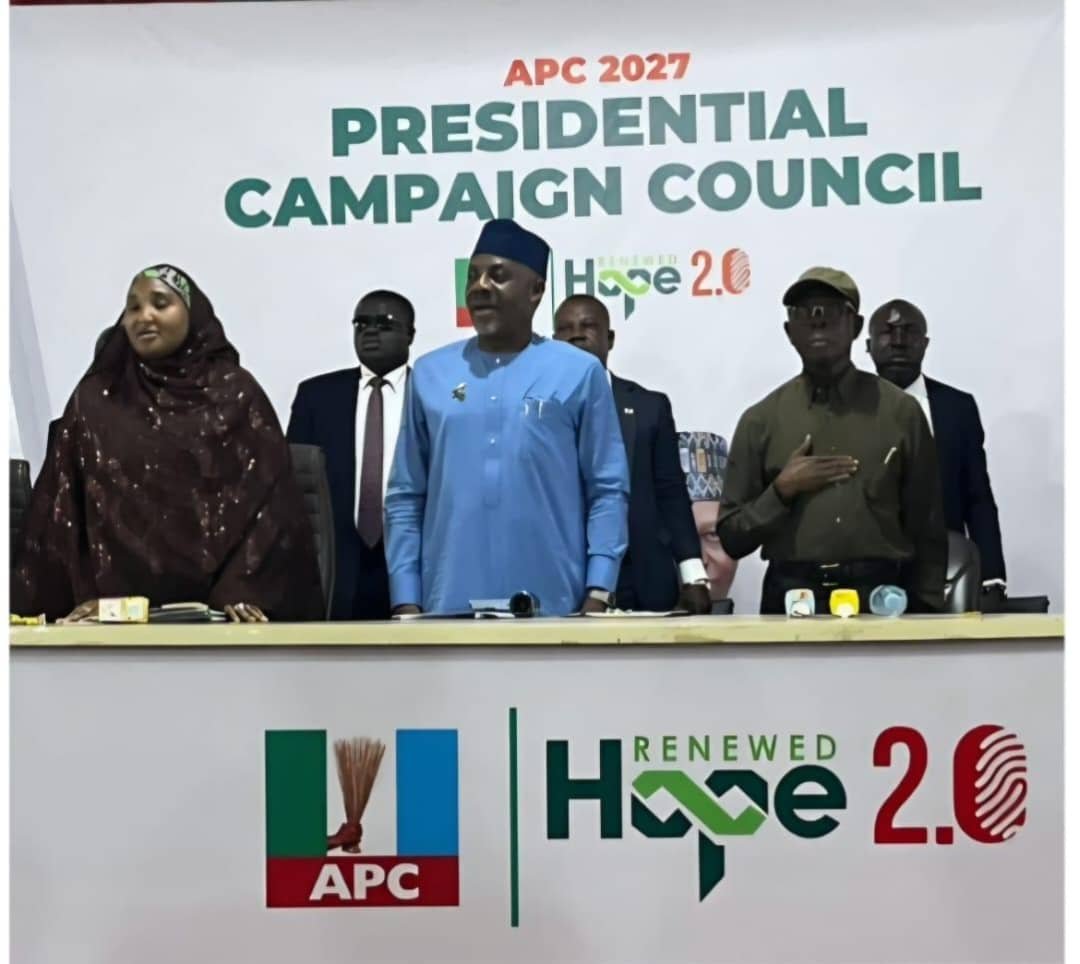
Speaking at the event, the former Edo State Governor, Adams Oshiomhole, said that success of the Renewed Hope education reforms must be measured not simply by government announcements but by their ability to restore university stability, improve lecturers’ welfare, retain academic talent and expand opportunities for children whose families cannot afford expensive alternatives.
He urged the government to sustain the reforms, insisting that education must remain a national development priority and not a privilege reserved for the financially comfortable.
Speaking on the recent attack by the former Vice President, Atiku Abubakar on the reform agenda of the present administration, he said Nigeria cannot afford the education privatisation agenda being advocated by former Vice-president.
He recalled that Atiku had pursued a privatisation agenda while serving as Vice-President, questioning the rationale behind advocating private-sector control of tertiary education in a country where millions of children still lack access to basic education.
The former governor challenged opposition politicians, particularly Atiku and Peter Obi, to clarify whether they would retain or abolish the current education policies if elected into office.
Oshiomhole also criticised Atiku over comments he attributed to the former Vice-President regarding the use of public resources to enrich friends, arguing that such an approach could undermine funding for education and student support programmes.
“If the money he wishes to use to enrich his friends is not diverted to paying student grants, remember that resources are limited at any point in time. That is why economics is about priorities. What is given to those students will not be available to be used to assist friends,” he said.
