
By Princess Funsho Sumanu
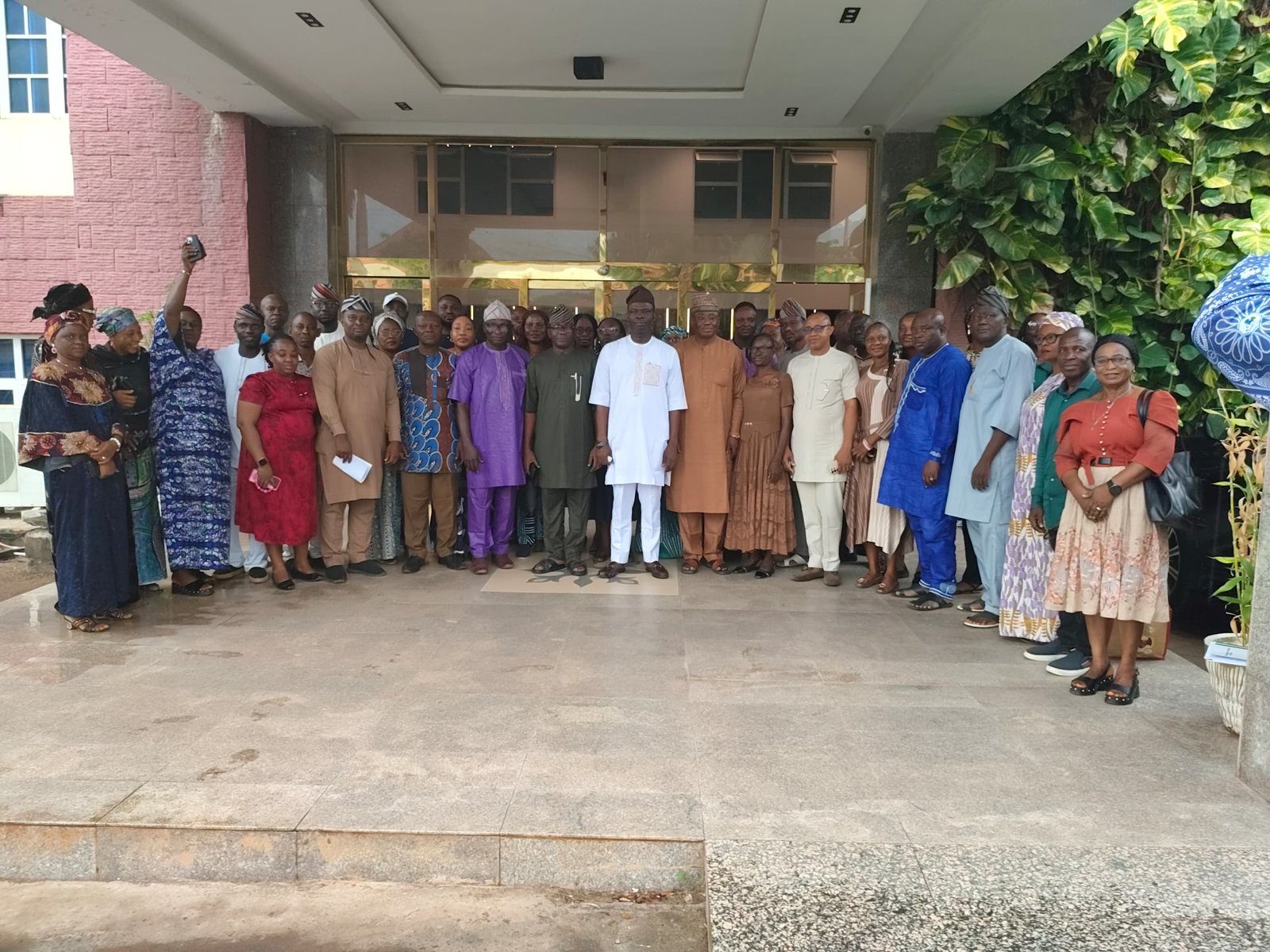
The Kogi State Government has commenced a two-day capacity-building workshop on the basics of Monitoring and Evaluation (M&E) and the development of a statewide Performance Management Plan, aimed at strengthening the capacity of M&E Officers across Ministries, Departments and Agencies (MDAs) to monitor government programmes, assess performance and measure development outcomes.
The workshop, organised by the Ministry of Finance, Budget and Economic Planning, is designed to strengthen institutional accountability, improve the use of public resources and ensure that government policies, programmes and projects deliver measurable results and tangible benefits to the people.
Speaking at the opening ceremony, the Commissioner for Finance, Budget and Economic Planning, Hon. Asiwaju Ashiru Idris, represented by the Special Adviser II on Budget and Economic Planning, Dr. Elijah Evinemi, said the initiative represents an important step towards building a results-oriented public service that places greater emphasis on accountability, efficient resource utilisation and tangible development outcomes.

He maintained that the success of government policies, programmes and projects should not be measured merely by the volume of resources allocated or funds expended, but by the results achieved and the positive impact of such interventions on the lives of citizens.
According to him, an effective Monitoring and Evaluation system provides government with the tools to track project implementation, measure progress against established targets, identify gaps and generate credible information for evidence-based decision-making.
He noted that Kogi State must progressively move from a system that focuses predominantly on activities and expenditure to one that prioritises measurable results, value for money and sustainable development impact.
On the development of Performance Management Plans, the Commissioner explained that the framework would translate the strategic objectives of government institutions into specific, measurable and time-bound commitments, with clear responsibilities, targets and indicators for assessing performance.
He added that effective implementation of the plans would strengthen the alignment between government priorities, institutional objectives, annual budgets and programme implementation, while providing a reliable basis for assessing the performance of MDAs.
The Commissioner called on Permanent Secretaries, Directors and Heads of MDAs to provide the necessary institutional support to their Monitoring and Evaluation Officers, particularly in data generation, record keeping, performance reporting and timely submission of monitoring reports.
He assured participants of the Ministry’s commitment to strengthening coordination among MDAs and institutionalising a robust Monitoring and Evaluation framework that would support effective planning, budget implementation and accountability.
In his opening remarks, the Permanent Secretary of the Ministry, Mr. Philip Ochu, described the workshop as an important intervention designed to improve the technical capacity of M&E Officers and strengthen the institutional framework for performance management across government.
He said Monitoring and Evaluation provides government with the information required to assess progress, identify implementation challenges and determine whether public programmes and projects are delivering their expected benefits.
Mr. Ochu stressed the need for MDAs to institutionalise regular performance reviews and ensure that identified gaps are addressed through appropriate corrective actions. He also assured participants that the Ministry would strengthen coordination in monitoring and reporting arrangements to ensure effective implementation of the initiative.
The Director of Monitoring and Evaluation, Mr. Bello Joseph, outlined the key objectives of the training, explaining that it was designed to strengthen participants’ competencies in data collection, analysis, validation and performance reporting. He said the workshop would equip M&E Officers with practical tools for developing effective Performance Management Plans and strengthen institutional planning across MDAs, ensuring that government activities are guided by reliable data, clear targets and measurable outcomes.
In her goodwill message, the Statistician-General of Kogi State, Mrs. Irewole Ayo-Alani, emphasised the importance of credible and reliable data in achieving effective monitoring and evaluation.
She called for stronger collaboration among government departments to improve data collection, availability and utilisation, noting that reliable information would enable government to assess previous interventions, identify areas requiring improvement and make informed decisions for future development programmes.
She urged participants to approach the training with commitment and ensure that the knowledge acquired translates into improved performance and better service delivery across their respective MDAs.
Also speaking, the Chairman of KONGONET, Mallam Hamza Aliyu, who represented the civil society community, commended the Ministry for the initiative, describing effective Monitoring and Evaluation as essential to translating government development plans into measurable improvements in the lives of citizens.
He observed that although Kogi State has a development plan capable of supporting engagements with development partners at national and international levels, the critical responsibility remains translating the objectives of the document into measurable services and tangible benefits for the people.
Mallam Aliyu identified inadequate data and weak data management as major challenges affecting effective decision-making and accountability in the State, urging participants to ensure that the workshop produces a more capable workforce and improved responses to monitoring and evaluation responsibilities.
He encouraged the Ministry and participants to ensure that the exercise produces practical results, noting that its success would help strengthen confidence in future capacity-building initiatives in the sector.
The technical sessions, facilitated by the Technical Assistant to the Director-General of the Governance Delivery Unit, Mr. Busari Kayode Oyelola, focused on practical approaches to monitoring and evaluation, performance management and the factors responsible for the failure of government projects.
Participants were introduced to the project cycle, results chain, logical framework, SMART objectives and indicators, baselines, targets and the preparation of basic Monitoring and Evaluation Plans.
The training also examined the causes of project failure at the planning, execution and utilisation stages, with discussions highlighting poor data, inadequate stakeholder involvement, political interference, procurement challenges, weak monitoring arrangements and poor sustainability practices.
The sessions further emphasised the need to involve M&E Officers from the planning stage of projects, ensure that interventions respond to the actual needs of communities, and strengthen accountability mechanisms to guarantee that public resources achieve their intended purposes.
The workshop is expected to equip participants with practical knowledge and tools for improving performance reporting, identifying implementation gaps, and contributing to the development of a comprehensive Performance Management Plan that will strengthen institutional effectiveness across Kogi State.
