
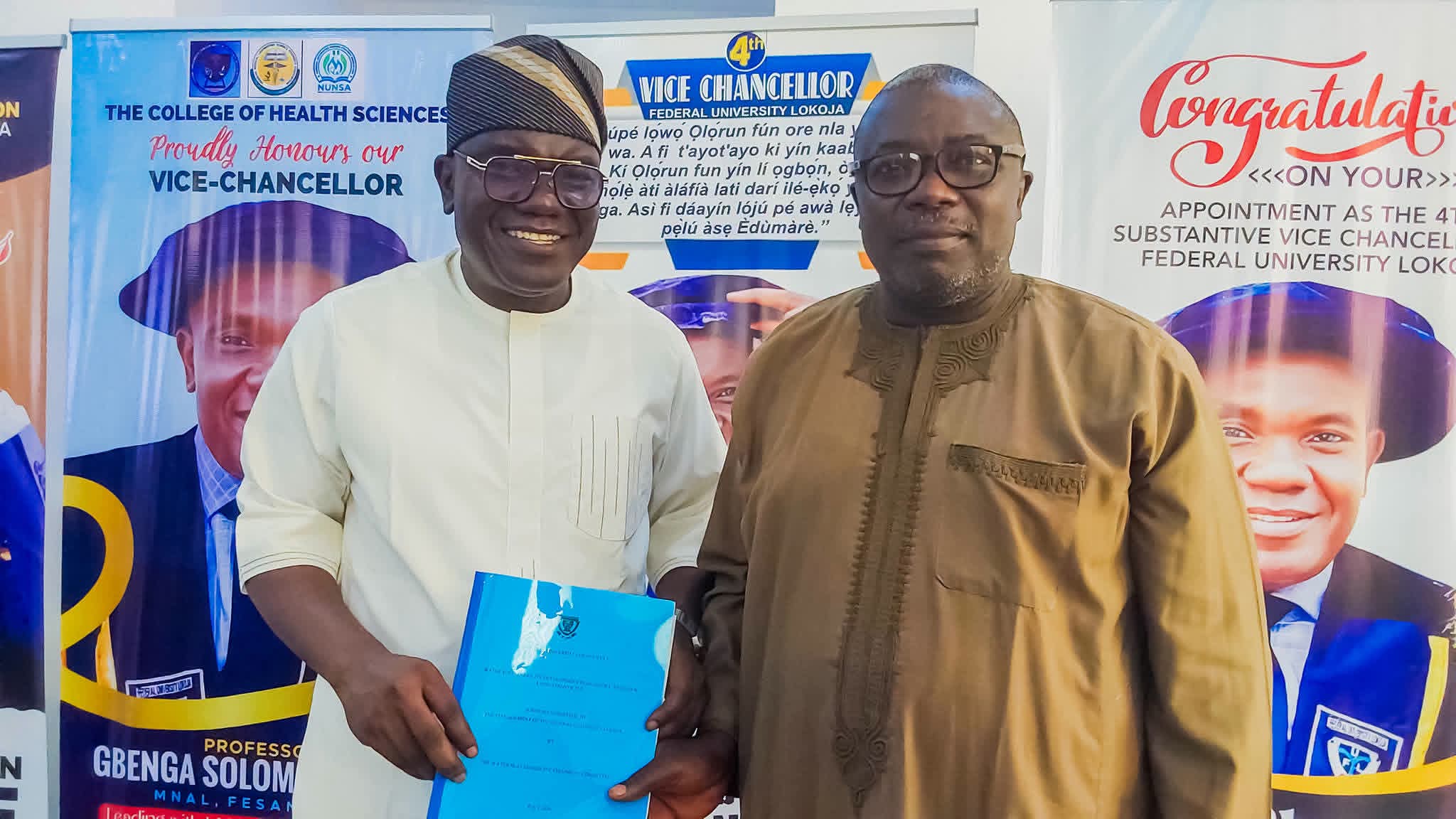
The Vice Chancellor of the Federal University Lokoja, FUL, Professor Gbenga Solomon Ibileye, has set the University on a new path towards sustainable water supply with the adoption of the Water Sustainability Technical Committee Report and the immediate conversion of the committee into an implementation committee to drive its recommendations.
Professor Ibileye announced the decision after receiving the report from the committee, describing the document as a comprehensive blueprint that provides practical solutions to the University’s immediate, medium-term and long-term water needs.
He said the report would not only address existing water challenges but would also serve as a strategic reference for future administrations.

According to the Vice Chancellor, a university of the 21st century cannot continue to rely primarily on boreholes for its water supply, stressing that the existence of about 45 boreholes across the campus reflects the magnitude of the challenge facing the institution.
“The university of the 21st century should not be run with boreholes. The existing 45 boreholes show clearly that there is a crisis. We must now begin to pursue more sustainable solutions,” he said.
Professor Ibileye assured members of the committee that management would immediately begin implementing recommendations capable of providing water to areas currently experiencing inadequate supply while pursuing more sustainable long-term interventions.
Kogi NPC Headquarters Rolls Out Full Digital Birth, Death Registration
He said the University would also explore opportunities to leverage existing water infrastructure within Kogi State and carefully implement other recommendations contained in the report.
“We will look at the immediate solutions to target areas that need adequate water. We will also leverage existing water infrastructure in the state and study the recommendations to see how we can harness them. The long-term recommendation is the way to go.”
The Vice Chancellor commended the committee for identifying government agencies and development partners that could support the implementation of the proposed projects, noting that the report had already outlined practical pathways for funding and sponsorship.
“One very admirable thing your committee has done is identifying the agencies that can support this project. That has made our work much easier.”
Describing the report as a landmark institutional document, Professor Ibileye said it would remain relevant long after the present administration. “This document will survive several generations of Vice Chancellors,” the Vice Chancellor noted.
He thereafter announced the adoption of the report and immediately inaugurated the committee as the implementation committee.
“I believe we have adopted this report. We have now converted and inaugurated you into the implementation committee to ensure these recommendations become reality. Your next assignment is to come forward with proposals for immediate implementation, including funding and sponsorship opportunities,” he said.
The Vice Chancellor directed the committee to work closely with the Directorate of Works to ensure effective coordination and seamless execution of the projects.
Professor Ibileye further praised the committee for delivering a professional assignment that saved the University considerable financial resources. “With what you have done, if we had engaged external consultants for this assignment, the University would have spent so much money. You have saved us time and resources.”

1 comment
[…] Also Read FUL Moves to End Water Crisis, Adopts Water Sustainability Blueprint […]