
“Wisdom is better than weapons of war, but one sinner destroyeth much good.” — Ecclesiastes 9:18
Among the Yoruba, there is a profound saying: “Igi kan kò dá igbó ṣe”—one tree does not make a forest.
Another African proverb teaches that “When brothers fight to death, strangers inherit their father’s estate.”
These ancient sayings capture the dilemma confronting Okunland today. The greatest threat to the progress of the Okun people is neither geography nor demography; it is the absence of a united voice on issues of common destiny.
Every great people have a platform through which they define their collective interests and negotiate their future. For the Yoruba, there is Afenifere. For the Igbo, Ohanaeze Ndigbo. For the people of the North, the Arewa Consultative Forum. These bodies do not eliminate political differences, nor do they prevent healthy debates. Rather, they provide an institutional framework through which diverse opinions are harmonised into a common position whenever the collective interest of their people is at stake.
The Okun people also have such a platform—the Okun Development Association (ODA).
The founding vision of the ODA was both noble and strategic. It was conceived as the umbrella organisation for all Okun people, irrespective of political party, religious affiliation, profession or local government of origin. It was designed to be the central rallying point for the socio-economic, cultural and political advancement of Okunland.
The word umbrella deserves emphasis. An umbrella exists to provide common cover. It does not compete with those beneath it; it protects them. Likewise, every association, forum, youth group, women organisation, professional body or political interest group in Okunland ought to see itself as operating under the broad canopy of the ODA. Their existence should enrich the Union, not replace it.
Sadly, this ideal appears to be gradually eroding.
Today, numerous organisations claim to represent the interests of Okun people. While their emergence may reflect genuine concern for the development of the land, many increasingly operate independently of the ODA.
They issue statements on matters of public concern, engage governments, endorse political positions and speak on behalf of Okunland without prior consultation with the recognised umbrella body.
The inevitable consequence is confusion.
Government officials do not know whose position represents the authentic voice of Okunland. Investors hear different messages. Political parties receive conflicting signals. The media report contradictory positions. Instead of amplifying the Okun cause, multiple voices often cancel one another.
This is particularly evident whenever major political issues arise.
No issue better illustrates this than the recurring conversation surrounding the governorship of Kogi State. There is broad agreement that the aspiration of Kogi West to produce the governor is legitimate and rooted in principles of equity, fairness and inclusion. However, agreement on the objective has not always translated into agreement on the strategy.
Different groups champion different aspirants. Parallel organisations organise separate consultations. Public statements are issued without coordination. Internal disagreements find their way into newspaper headlines and social media platforms.
The unfortunate result is that what should have been a compelling argument for justice sometimes appears as a contest of competing ambitions.
Politics rewards organisation.
No serious political bloc negotiates from a position of visible division. Those seeking support naturally prefer to engage a united constituency rather than one speaking through multiple microphones. A divided house weakens its own bargaining power before anyone else has the opportunity to weaken it.
Beyond politics lies an even greater concern—the apparent factionalisation within the Okun Development Association itself.
An umbrella divided against itself cannot effectively shelter others.
Where there are parallel leadership claims, prolonged internal disputes or competing structures, the authority of the institution gradually diminishes. The casualty is not merely the organisation but the entire community that depends upon it for direction.
History offers painful lessons.
Communities that achieved remarkable political influence did so because they deliberately subordinated individual ambitions to collective objectives. They recognised that while opinions may differ, certain issues transcend personal interests.
This is the strength of enduring institutions.
Afenifere has experienced disagreements, yet the Yoruba still recognise it as an important platform for articulating common concerns. Ohanaeze Ndigbo has witnessed leadership contests, but it remains the principal socio-cultural voice of the Igbo nation. The Arewa Consultative Forum accommodates diverse political interests while maintaining its identity as a respected northern platform.
None of these organisations is perfect.
Their strength lie not in the absence of disagreements but in their capacity to resolve differences without surrendering the larger vision.
That is the lesson the ODA must embrace.
The challenge before the Union is therefore not merely organisational; it is existential.
It must deliberately rebuild confidence across Okunland. It must become more inclusive, more transparent and more responsive to the aspirations of the younger generation while retaining the wisdom of respected elders.
Its leadership should emerge through processes that inspire legitimacy rather than controversy. Every local government in Okunland should feel adequately represented. Women, youth, professionals, traditional rulers, religious leaders, academics, business leaders and the diaspora community should all have structured roles within the Union.
Equally important is the relationship between the ODU and other associations.
The existence of multiple organisations should never be viewed as a threat. Diversity is healthy in any democratic society. What is unhealthy is competition for legitimacy.
Rather than functioning as rival centres of authority, these bodies should become specialised partners. Youth organisations should champion youth development. Professional groups should promote intellectual and economic advancement. Community development associations should execute local projects that impact positively. Political forums should mobilise participation.
Yet whenever issues affecting the collective destiny of Okunland arise, there should be only one coordinated position issued through the ODA after broad consultation.
One voice.
One message.
One destination.
The Union should also institutionalise an annual Okun Leadership and Development Summit, bringing together political office holders, traditional rulers, captains of industry, civil society, youth organisations, women groups, professionals and representatives of all recognised associations.
Such a summit would provide an avenue to debate difficult issues behind closed doors while presenting consensus positions to the public.
The ODA should further establish a Standing Committee on Public Affairs to coordinate media engagement, policy advocacy and strategic communication. In an era dominated by instant information and social media, silence creates a vacuum that competing narratives quickly occupy.
Most importantly, Okun leaders must rediscover the discipline of consultation.
Every disagreement need not become a public spectacle.
Every political preference need not become communal division.
Every ambition need not become institutional conflict.
The Bible offers timeless counsel: “Behold, how good and how pleasant it is for brethren to dwell together in unity” (Psalm 133:1). Unity attracts strength, confidence and divine favour. Disunity breeds suspicion, stagnation and avoidable losses.
This does not mean suppressing dissent.
Consensus is not conformity.
Unity is not uniformity.
Healthy societies encourage robust debate before decisions are reached. Once consensus emerges, however, personal preferences should give way to the collective interest.
Egbeda-Egga Lauds Karimi as Classroom, Borehole Project Kicks Off
The future of Okunland depends less on the brilliance of individual leaders than on the strength of its institutions.
Strong institutions outlive personalities.
Strong institutions preserve continuity.
Strong institutions command respect.
The ODA must therefore rise above transient politics and reclaim its historic responsibility as the authentic umbrella of the Okun people.
The price of unity may be compromise.
It may require patience.
It may demand sacrifice.
But the price of disunity is far greater.
It is measured in abandoned opportunities, weakened political influence, reduced bargaining power, fragmented development efforts and generations asking why a people blessed with intellect, enterprise and distinguished sons and daughters struggled to maximise their collective potential.
The future will not judge the Okun people by how many associations they established. It will judge them by whether those associations strengthened or weakened their common cause.
History rewards communities that organise themselves.
History remembers peoples who place the common good above personal ambition.
The challenge before the Okun Development Association is therefore simple but urgent: reclaim the umbrella, restore confidence, rebuild consensus and lead Okunland to speak with one voice.
For in the affairs of nations and communities alike, one united voice can achieve what a thousand discordant voices never will.
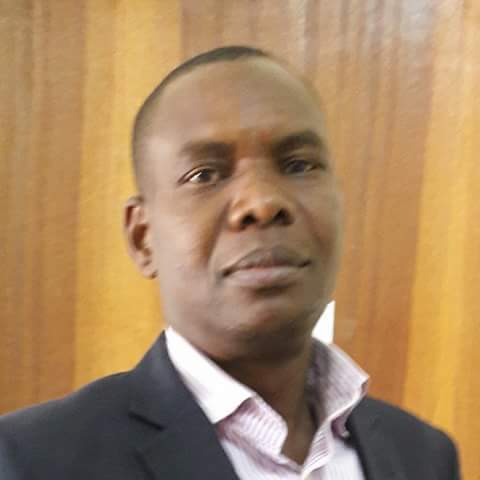
Joseph Aiyejoto is a Concerned Son of Okunland.
