
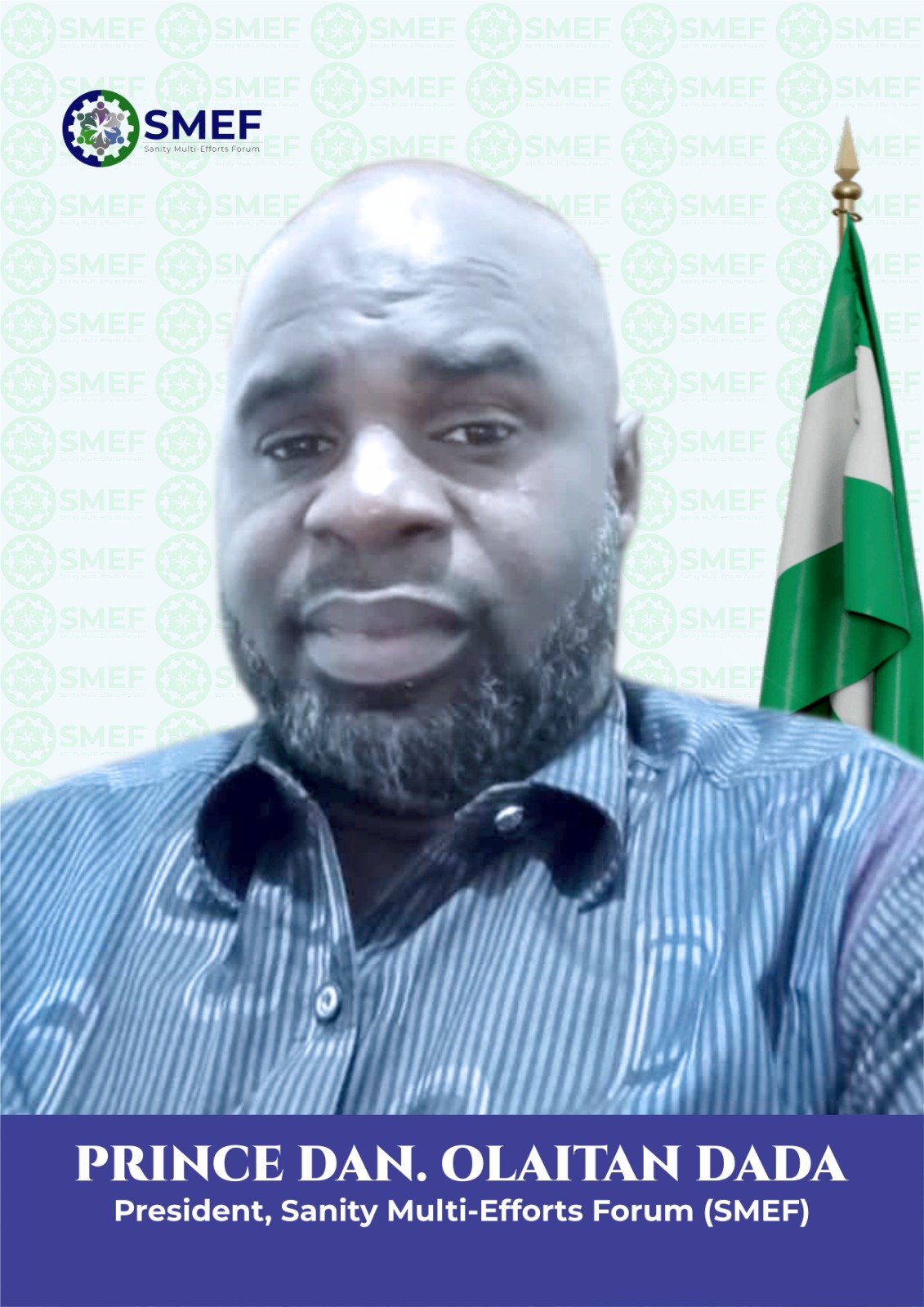
By Prince Dan. Olaitan Dada
In the wake of the Joint Revenue Board (JRB) Communiqué banning roadblocks nationwide, some revenue stakeholders still insist: “There is no way we can successfully implement vehicle papers without roadblocks.”
That statement is not only false. It is dangerous to Nigeria’s economy, image, and rule of law.
As President of the Sanity Multi-Efforts Forum (SMEF) — a coalition whose sole mandate is to tackle the menace of illegalities across all sectors in Nigeria and restore sanity to public conduct — it has become necessary to define the word “roadblock” and explain why it must be retired from revenue enforcement forever.
1. WHAT IS A “ROADBLOCK” IN PRACTICE?
To the average Nigerian, “roadblock” does not mean a lawful security checkpoint. It means:
1. Tyres, drums, planks, and sticks dumped across federal or state highways.
2. Ununiformed youths flagging down vehicles with aggression and threats.
3. Cash collection on the spot, without receipts, POS, or remittance trace.
4. Traffic paralysis — ambulances, school buses, and goods trucks held hostage for N500.
5. Extortion and violence — where refusal leads to slapped drivers, broken windscreens, or seized keys.
That is the roadblock Nigerians know. That is the roadblock the Joint Revenue Board (JRB) banned. That is the roadblock the international community films with the caption: “This is how we collect tax in Nigeria.”
2. WHY STAKEHOLDERS CLING TO ROADBLOCKS
The claim that enforcement cannot work without roadblocks fails on three grounds:
1. It admits incompetence – It says we have no strategy except harassment. Modern governments use data, ANPR cameras, digital permits, and office-based compliance. Roadblocks are a 1980s method unfit for 2026.
2. It ignores the law – The JRB, comprising all 36 States and the FCT, has outlawed it. Continuing it means telling our principals we reject their own resolution.
3. It kills the industry it claims to protect – Every roadblock video that trends is another foreign investor that cancels Nigeria, another tourist that diverts to other destinations, another citizen who says, “I’d rather not brand my vehicle.”
3. THE CRIMINALITY OF ROADBLOCKS
1. Illegal Obstruction – Section 1 of the Federal Highways Act makes it an offence to obstruct federal highways. Only the Police, FRSC, and Military on security duty can lawfully mount checkpoints.
2. Extortion – Section 12 of the ICPC Act and Section 98 of the Criminal Code criminalize demanding money by intimidation. That is what happens when touts block roads for “sticker money”.
3. Impersonation – Most roadblock operators are not staff of Internal Revenue Services or MDAs. Yet they wear fake IDs and claim government authority. That is fraud.
4. Economic Sabotage – The President’s Ease of Doing Business policy guarantees “free movement of goods and persons”. Roadblocks directly sabotage GDP by delaying haulage and logistics.
4. THE EMBARRASSMENT BEFORE THE WORLD
1. Tourism: No UNESCO site or investor wants to see “Welcome to Nigeria” written behind burning tyres and angry boys collecting N1,000.
2. Diplomacy: Embassies warn their citizens: “Avoid Nigerian highways due to illegal checkpoints.” That advisory hurts us all.
3. Trade: The African Continental Free Trade Area cannot work if a truck from Lagos to Maiduguri meets more than 50 illegal roadblocks. The continent is watching.
4. Human Rights: Videos of drivers being flogged for “EMBLEM, Hackney Permit” go viral. The world calls it state-sanctioned hooliganism.
Is that the reputation we want for Nigeria?
5. THERE IS A LAWFUL ALTERNATIVE — AND IT WORKS
The JRB Communiqué did not ban enforcement. It banned roadblocks. It commanded us to migrate to:
1. Office-based compliance – Vehicle owners visit MDAs, MLAs, and Technical Partners’ offices to obtain or renew licenses and permits.
2. Technology-driven checks – VIS/VIO, Traffic Management Authorities, and FRSC verify permits digitally during routine patrols and at parks, not by blocking highways.
3. Scheduled joint operations – Joint Taskforce comprising IRS Enforcement Teams, State Signage and Advertisement Agencies, VIS/VIO, Traffic Management Authorities, Transport Ministry, and FRSC agree on days and locations for joint compliance exercises without blocking roads.
4. Stakeholder sensitization – NURTW, NARTO, RTEAN, and corporate fleets are pre-informed to comply. Voluntary compliance is cheaper than force.
Lagos LASTMA, FCT VIO, and Kaduna KASTLEA already operate this way. Their IGR did not collapse. It increased, because businesses complied when they were not harassed.
6. SMEF’S STAND: WHY THIS FIGHT IS OUR MANDATE
The Sanity Multi-Efforts Forum (SMEF) was founded with three core objectives:
1. To eradicate illegalities that damage Nigeria’s economy and image, especially extortion on highways.
2. To promote lawful, technology-driven revenue systems that protect citizens and grow government income.
3. To defend the integrity of legitimate sectors like Mobile Advertisement and allied revenue collections from being destroyed by the actions of touts and impostors.
Roadblocks violate all three. Therefore, SMEF aligns fully with the Joint Revenue Board (JRB), Internal Revenue Services (IRS), MDA’s and Security Agencies to end them.
7. FINAL WORD TO STAKEHOLDERS
Colleagues, the word “roadblock” has become a wound on Nigeria’s image. Every time we defend it, we reopen that wound before the world.
We can enforce without embarrassment.
We can collect revenue without criminality.
We can be lawful and still be effective.
The JRB has spoken.
Our principals — tiers of Government in the 36 States of Nigeria including the FCT — have spoken.
Let us not be the ones still shouting “roadblock” when the whole country has moved on.
Roads are for movement. Offices are for compliance. Technology is for verification. That is modern revenue enforcement.
Sanity Multi-Efforts Forum (SMEF) stands with the Joint Revenue Board (JRB), with Internal Revenue Services (IRS), with MDA’s including Ministries of Transport, Commerce and Industries, Ministries of Environment, Signage and Advertisement Agencies, and with a Nigeria free of highway extortion.
Written by Prince Dan. Olaitan Dada, President, Sanity Multi-Efforts Forum (SMEF).
