
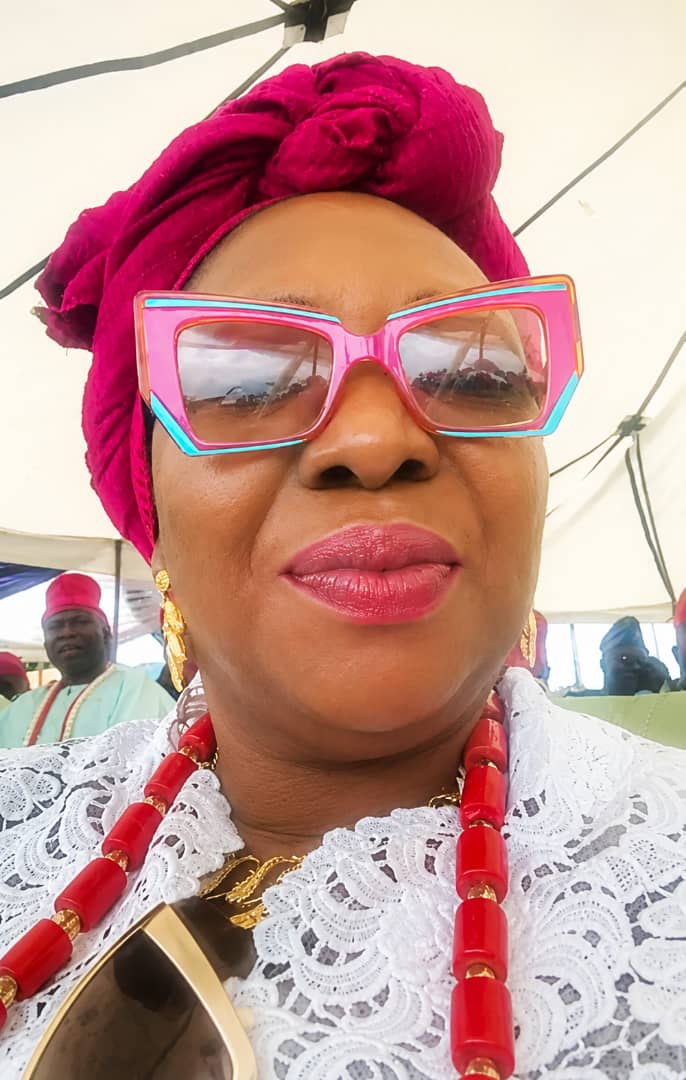
The Factors Eroding Our Cultural Values: Gbede Kingdom in Focus By Yeye Aaremo Chief (Mrs.) Ayodele Oluwakemi PhD, FNCS, PNIWIIT
Yeye Eko of Ayetoro Gbede
Founder & Initiator of Okun Daughters Forum
President, Nigerian Women In Information Technology (NIWIIT)
PROTOCOLS
I consider it a great honour and privilege to stand before this august gathering today as the Guest Speaker at this historic occasion marking the 3rd Edition of the Cultural Heritage, Conferment of Honourary Titles and Merit Awards, as well as the commissioning of the palace project and fundraising for the completion of the council secretariat.
I sincerely appreciate the Gbede Traditional Council and the Gbede Development Union for finding me worthy of this invitation. I congratulate the entire Gbede Kingdom for sustaining this noble initiative aimed at preserving our rich cultural heritage while promoting development within our communities.
INTRODUCTION
Our theme today, “The Factors Eroding Our Cultural Values: Gbede Kingdom in Focus,” is timely, relevant, and deserving of serious reflection.
Culture is the identity of a people. It is the totality of our beliefs, customs, traditions, language, values, norms, dressing, food, festivals, moral standards, and way of life passed from one generation to another.
A people without culture are like a tree without roots. When culture disappears, identity disappears. When identity disappears, a people become vulnerable to confusion, moral decay, and loss of direction.
The Gbede people are known for integrity, hard work, respect for elders, communal living, hospitality, discipline, and strong family values. These virtues have sustained our communities for generations and contributed significantly to the development of Ijumu Kingdom and Kogi State as a whole.
However, there is growing concern that many of these cherished values are gradually fading away.
The question before us today is: What are the factors responsible for this erosion, and what can we do to reverse the trend?
FACTORS ERODING OUR CULTURAL VALUES
1. Uncontrolled Influence of Globalization
Globalization has connected the world and brought many benefits. However, it has also exposed our people, especially the younger generation, to foreign cultures that often conflict with our traditional values.
Many young people today are more familiar with foreign lifestyles than their own cultural heritage. They can easily identify foreign celebrities but know little about the history, heroes, and traditions of Gbede Kingdom.
While embracing global opportunities, we must avoid losing our cultural identity.
2. Decline in Indigenous Language Usage
Language is one of the strongest pillars of culture.
Sadly, many parents no longer speak indigenous languages to their children. Some children can communicate fluently in English but struggle to converse in their mother tongue.
When a language dies, stories die with it. Proverbs disappear. Traditional wisdom becomes lost.
The survival of Gbede culture depends greatly on preserving our language and encouraging its use both at home and within our communities.
3. Weak Family and Community Value Systems
Traditionally, moral upbringing was a collective responsibility.
Parents, grandparents, uncles, aunts, neighbours, and community leaders all participated in raising children.
Today, many families have become too busy to intentionally transfer cultural and moral values to their children.
As a result, discipline, respect, honesty, and communal responsibility are gradually declining.
4. Social Media and Digital Technology
Technology is a powerful tool for development, education, and communication.
However, excessive exposure to social media has significantly influenced the behaviour, dressing patterns, speech, and lifestyle choices of many young people.
Unfortunately, some online content promotes materialism, disrespect, violence, and lifestyles that conflict with our traditional values.
Technology should serve culture, not replace it.
5. Urbanization and Rural-Urban Migration
Many young people leave their communities in search of education and employment opportunities.
While this movement is necessary for growth, it often reduces their connection with traditional institutions and cultural practices.
Over time, many lose touch with festivals, traditional ceremonies, community development activities, and indigenous knowledge.
6. Declining Respect for Traditional Institutions
Traditional rulers have historically served as custodians of culture and guardians of societal values.
In recent times, some people no longer appreciate the important role of traditional institutions in preserving peace, promoting unity, and safeguarding cultural heritage.
When traditional institutions are weakened, cultural values also become weakened.
7. Materialism and the Pursuit of Quick Wealth
One of the greatest challenges facing society today is the obsession with wealth acquisition at all costs.
Many young people now measure success solely by financial status rather than character, integrity, knowledge, and service.
Our forefathers taught us that a good name is better than riches acquired through questionable means.
We must return to values that prioritize character, honesty, and hard work.
8. Neglect of Cultural Education
Many schools focus heavily on academic and professional subjects while giving little attention to cultural education and local history.
Young people should know the stories of their ancestors, understand community traditions, and appreciate the sacrifices made by previous generations.
Without cultural education, future generations may inherit prosperity without identity.
THE CONSEQUENCES OF CULTURAL EROSION
If this trend continues unchecked, the consequences may include:
i. Loss of cultural identity. ii. Moral decadence among youths. iii. Weakening of family bonds. iv. Increased social conflicts.
v. Loss of indigenous knowledge.
vi. Decline in communal development. vii. Reduced respect for elders and traditional institutions.
viii. Disconnection between generations.
A society that loses its values ultimately loses its direction.
THE WAY FORWARD
1. Strengthen Family Values
Parents must become intentional teachers of culture.
Children should be taught respect, discipline, honesty, hard work, and responsibility from an early age.
Culture begins at home.
2. Promote Indigenous Language
Families should encourage the use of indigenous languages at home.
Community leaders should support language preservation initiatives through cultural competitions, storytelling sessions, and educational programmes.
3. Use Technology Positively
Instead of viewing technology as an enemy, we should use it to document and promote our cultural heritage.
Our festivals, historical sites, folktales, traditional music, and community achievements should be showcased through digital platforms.
4. Support Cultural Festivals
Events such as today’s Cultural Day should receive greater support from government, private organizations, and community members.
Such events provide opportunities for cultural education and intergenerational learning.
5. Empower Traditional Institutions
Traditional rulers should continue to play active roles in preserving cultural values, resolving conflicts, and promoting community development.
Their wisdom and leadership remain essential to societal stability.
6. Engage the Youth
The future of Gbede culture lies in the hands of our youth.
Young people should not merely be spectators but active participants in cultural preservation initiatives.
Youth associations, schools, and community groups should be encouraged to organize cultural programmes regularly.
7. Document and Preserve Our History
Every community should invest in documenting its history, traditions, customs, and achievements for future generations.
What is not documented may eventually be forgotten.
CONCLUSION
Distinguished ladies and gentlemen,
Culture is not inherited automatically; it is preserved deliberately.
Every generation has a responsibility to pass on its heritage to the next generation.
The Gbede Kingdom has a rich history, noble traditions, and enduring values worthy of preservation. Let us commit ourselves today to protecting these treasures from extinction.
As we celebrate our cultural heritage and honour deserving sons and daughters of the kingdom, let us also renew our commitment to unity, integrity, respect, hard work, and community development.
May future generations look back and say that this generation did not allow the light of Gbede culture to go out.
Together, let us preserve our heritage, strengthen our values, and build a prosperous future for Gbede Kingdom.
I thank the Gbede Traditional Council, the Gbede Development Union, and all stakeholders for organizing this memorable event.
May God bless Gbede Kingdom.
May God bless Ijumu Kingdom.
May God bless Okun Nation May God bless Kogi State.
And may God bless the Federal Republic of Nigeria. Thank you for listening.
