
By Prince Dan Olaitan Dada
Politics in Nigeria has long operated on one assumption: after the votes are counted, the war continues. Kogi State may have just disproved that.
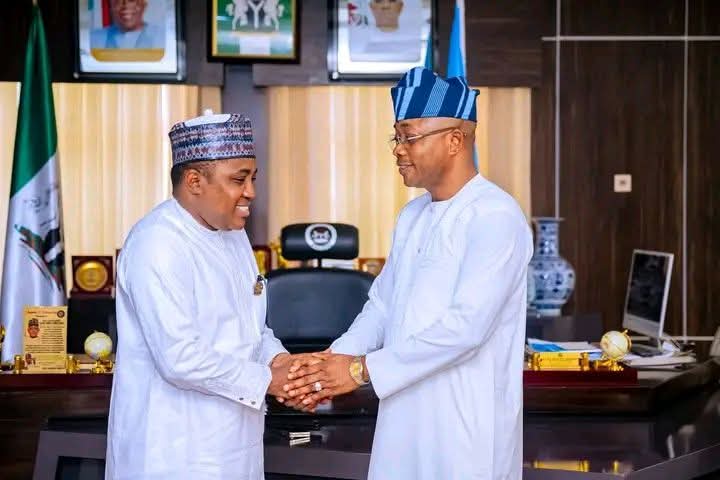
In the space of 72 hours this week, two reconciliations unfolded in the state that deserve attention beyond Lokoja. First, Alh. Murtala Yakubu Ajaka met with Igala elders and stakeholders in Kogi East to address the fractures left by the 2023 governorship election. Then, Ajaka walked into Government House to meet Governor Ahmed Usman Ododo. The message from both encounters was consistent: the election is over, and the state cannot afford to keep fighting it.
As President of the 36 Political Elevation Group (36 PEG), I see this as more than a handshake for the cameras. It is a practical example of what we have been advocating across Nigeria’s 36 states and the FCT: that political competition does not have to become permanent hostility.
Why this matters now.
Nigeria’s political culture rewards division. Opponents become enemies, supporters inherit the bitterness, and governance suffers. Governor Ododo’s approach in Kogi—using dialogue to resolve both political and communal disputes, as seen earlier in Bagana, Omala—offers an alternative. It suggests that leaders can separate the contest from the country.
Ajaka’s acknowledgment of the divisive tone of 2023 and his commitment to work with all stakeholders, regardless of party, is equally significant. So is Ododo’s public description of the visit as “mature and statesmanlike.” These are small words, but in Nigerian politics, they are rare.
What 36 PEG is working toward.
At 36 PEG, our work across states and at the federal level is built on four pillars: reforming political culture toward issue-based engagement; facilitating dialogue to prevent post-election violence; mobilizing citizens for civic accountability; and pushing for national cohesion where “state over ego” becomes the norm.
Kogi’s recent events fit directly into that framework. They show that reconciliation is not weakness. It is a strategy for stability and for making governance possible after the ballots are done.
The road ahead.
One meeting does not erase years of mistrust, and Kogi’s reconciliation will be tested by appointments, policies, and the approach to 2027. But the signal has been sent. Through our state coordinators and federal partners, 36 PEG will continue to document and support similar efforts in other states.
If Kogi can choose dialogue over division, other states can too. Nigeria’s next electoral cycle does not have to be a repeat of the last. It can be different, if leaders decide it should be.
36 PEG is a non-partisan civic platform operating in Nigeria’s 36 states and the FCT. For comments or interviews, contact 08022299952
